
Stake in Trinidad and Tobago: licence, legality and risk
The evidence packet identifies a dated regulatory gap rather than a local approval. On 24 August 2026, the Gambling and Gaming Commission of Trinidad and Tobago said online betting was not presently contemplated and that further guidance would follow. The packet separately maps stake.com to Medium Rare N.V. and Curaçao licence OGL/2024/1451/0918, but contains no current primary Trinidad and Tobago record matching that exact domain and operator.
That distinction controls the verdict. The available material supports recognition of the service and a stated foreign licensing relationship, not authorisation by Trinidad and Tobago. It also does not prove that deposits, identity checks or withdrawals will work for a particular customer. No account, payment or withdrawal test was performed.
| Question | Evidence-led answer |
|---|---|
| Is the exact domain identifiable? | Yes. The operator-supplied record identifies stake.com as the service domain. |
| Is the named company mapped in the packet? | Yes. Medium Rare N.V. is the named operator. |
| Is a licence identified? | Curaçao OGL/2024/1451/0918 is supplied as a foreign licence. |
| Is there confirmed T&T authorisation? | No current primary local record in the packet confirms it. |
| Overall signal | Amber: important local and transaction evidence remains open. |
What changed in the dated regulatory record
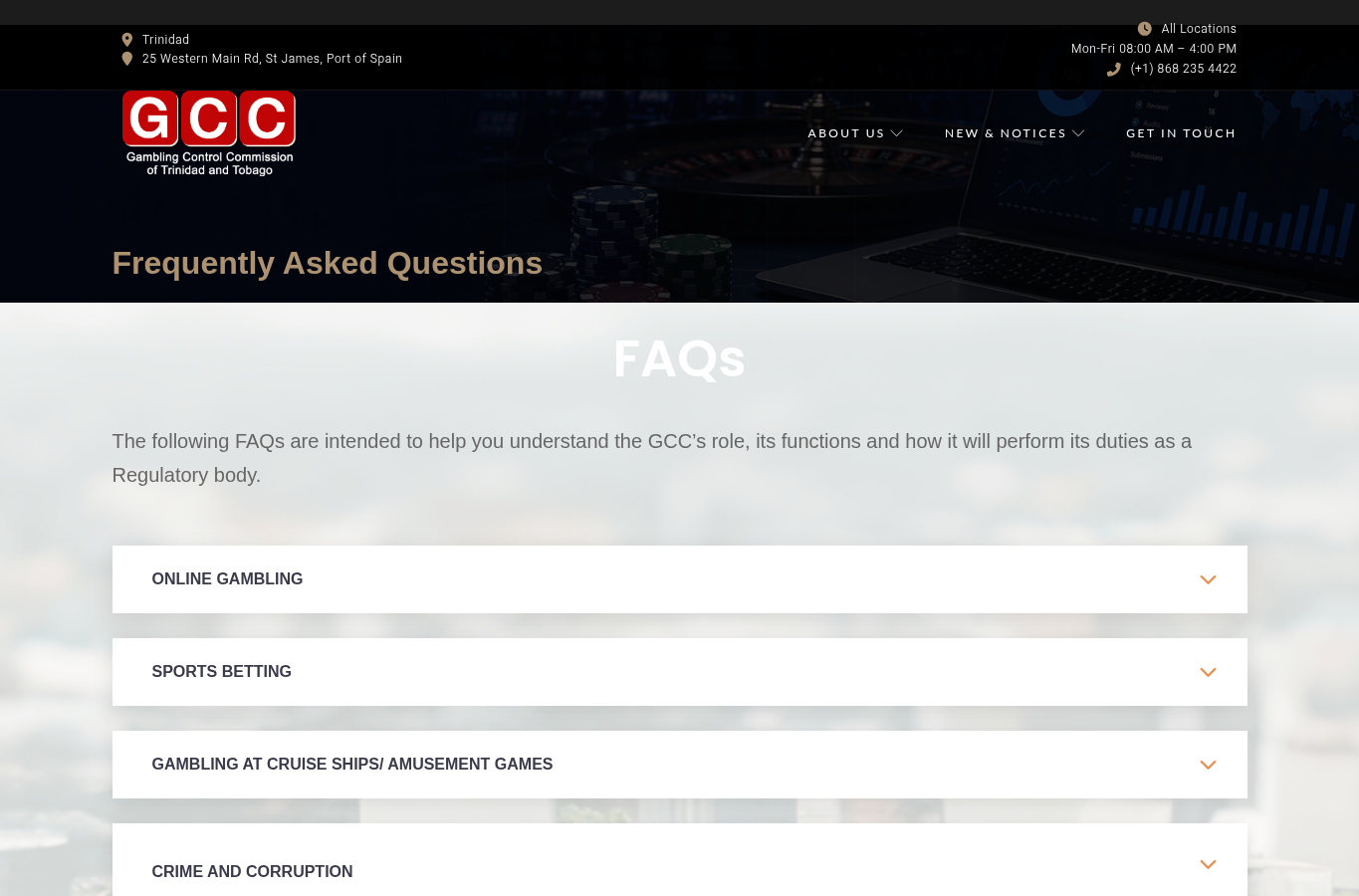
The decisive dated local record was checked on 24 August 2026. The Commission’s FAQ said online betting was not presently contemplated and indicated that further guidance would follow. That wording does not establish a locally licensed route for this particular service. It also should not be stretched into a claim that the Commission made a specific adverse finding against the company or domain.
The packet names a Curaçao licence but supplies no dated foreign register extract showing when a registration changed, when the cited number first appeared, whether any predecessor authorisation existed or whether its status later changed. There is no expiry date in the accepted material. A responsible chronology therefore has two entries: the local position confirmed on the checking date, and a foreign licence identifier whose detailed register history remains unproven here.
The official Commission guidance on online betting supplies the local regulatory context. The official parliamentary entry for the Gambling and Gaming Control Act, 2021 confirms the legislation record. Neither is an approval notice for the service.
Domain, company and licence map
Three separate identity questions must be kept apart: which domain presents the service, which legal company is named as operator, and which authority issued the cited licence. The operator record supports the first point only at its own evidential level. The packet supplies the company and licence mapping, but no accepted primary Curaçao register record was included to independently confirm their current status.
| Identity layer | Packet entry | What it establishes | What remains open |
|---|---|---|---|
| Domain | stake.com | The exact address presenting the service | It does not by itself prove local approval or safety |
| Operator | Medium Rare N.V. | The company named in the supplied entity map | No current local register match is supplied |
| Licence | Curaçao OGL/2024/1451/0918 | A foreign licence identifier | Current foreign register status and expiry are not evidenced |
| Local authority | Gambling and Gaming Commission of Trinidad and Tobago | Source of the local regulatory statement | No domain-specific authorisation appears in the packet |
A logo helps recognise visual branding, but it is not regulatory evidence and cannot authenticate a website. It should be compared only as a navigation aid, never treated as proof that a domain belongs to the named company.

Is Stake a scam or legit?
The supported answer is neither a blanket endorsement nor a scam accusation. The exact domain exists and presents the service, while the packet identifies Medium Rare N.V. and a Curaçao licence number. Those facts make the service identifiable. They do not establish Trinidad and Tobago authorisation, successful withdrawals, fair dispute handling or the present validity and scope of the foreign permission.
There is also no official adverse record in the supplied evidence naming this domain or company. That prevents a red finding. At the same time, the absence of a current primary local match, a foreign register extract and transaction testing prevents a green finding. Amber is the proportionate signal because material questions remain open.
User comments can describe alleged delays, verification disputes or individual experiences, but they do not prove what happened without account records and competent corroboration. A rating is not a legal conclusion. Anyone deciding whether the service is suitable should focus on verifiable identity, terms, transaction records and the practical availability of redress rather than slogans or aggregate scores.
Legal position for a customer in Trinidad and Tobago
The Gambling and Gaming Control Act, 2021 is confirmed through the official parliamentary publication entry. The Commission’s later FAQ supplies the more specific accepted statement that online betting was not presently contemplated and that guidance would follow. Together, these sources describe the local framework without granting this operator permission.
A foreign licence is jurisdiction-scoped. It should not be described as a Trinidad and Tobago licence, a substitute for local authorisation or proof that every local transaction is lawful. The packet contains no legal opinion resolving whether an individual customer may use the service, whether the service may target residents, or how another law might apply to a specific transaction.
| Claim | Supported? | Reason |
|---|---|---|
| The operator has T&T authorisation | No | No current primary local match was supplied |
| The packet names a foreign licence | Yes | Curaçao OGL/2024/1451/0918 is identified |
| The foreign licence settles local legality | No | Foreign scope cannot be treated as local permission |
| The Commission issued a domain-specific warning | No | The accepted FAQ statement is general |
| Individual use is conclusively legal or illegal | Unknown | No case-specific legal determination is supplied |
For wider context, consult the internal guide to licence and law. Where legality matters to a real dispute, independent professional advice is more appropriate than relying on promotional wording.
Payments and card checks before depositing
No accepted record establishes which deposit methods are currently offered to customers in Trinidad and Tobago. The packet does not confirm cards, bank transfers, electronic wallets, cryptocurrency, minimum deposits, fees, exchange rates or processing times. A cashier screen can vary by account, location, currency and verification status, so unsupported method lists would be misleading.
The Central Bank publication on the payments system in Trinidad and Tobago supplies local payment-system terminology, not confirmation that the operator accepts a particular instrument. Its value is in helping customers distinguish card, transfer and settlement concepts when reviewing their own records.
Before paying, record the displayed merchant descriptor, currency, amount, fee, exchange rate and payment recipient. Check whether the recipient name corresponds with the disclosed operator or a clearly explained processor. Preserve the confirmation screen and bank record. Do not assume that a successful deposit proves withdrawals will be processed through the same channel.
| Check | Evidence to retain | Reason |
|---|---|---|
| Currency | Cashier display and account statement | Conversion can change the effective cost |
| Recipient | Merchant or wallet destination | Unexpected names may complicate tracing |
| Fee | Quoted charge and final debit | The two amounts may differ |
| Reversibility | Issuer’s written terms | Recovery rights vary by method |
| Limits | Displayed minimum and maximum | Limits may differ between deposit and withdrawal |
More general transaction precautions are collected in the payments guide.
Withdrawals, verification and missing test evidence
No withdrawal test was performed. There is no accepted evidence of a successful or failed cash-out, processing time, fee, limit, account restriction or document request for a Trinidad and Tobago customer. It would therefore be inaccurate to label withdrawals fast, slow, reliable or unsafe.
Know-your-customer checks commonly involve identity and payment records in regulated financial settings, but the packet does not establish the operator’s exact document list, review sequence or response time. Customers should read the terms shown to their own account before depositing and compare the registered name, date of birth and payment ownership details for consistency. No document should be sent to an address obtained through an advertisement, message or copied support profile.
If a withdrawal is delayed, preserve a timeline containing the request time, amount, currency, status messages, requested documents, submission receipts and every response. Separate a pending request from a rejected one, and a verification request from a confiscation allegation. Those distinctions matter if a complaint is later reviewed.
Do not deposit more merely because somebody claims an extra payment will unlock a balance. Verify any fee inside the authenticated account and against the applicable terms. If the demand appears through an unrelated messenger account, stop and check the domain independently.
Complaint and user-report chronology
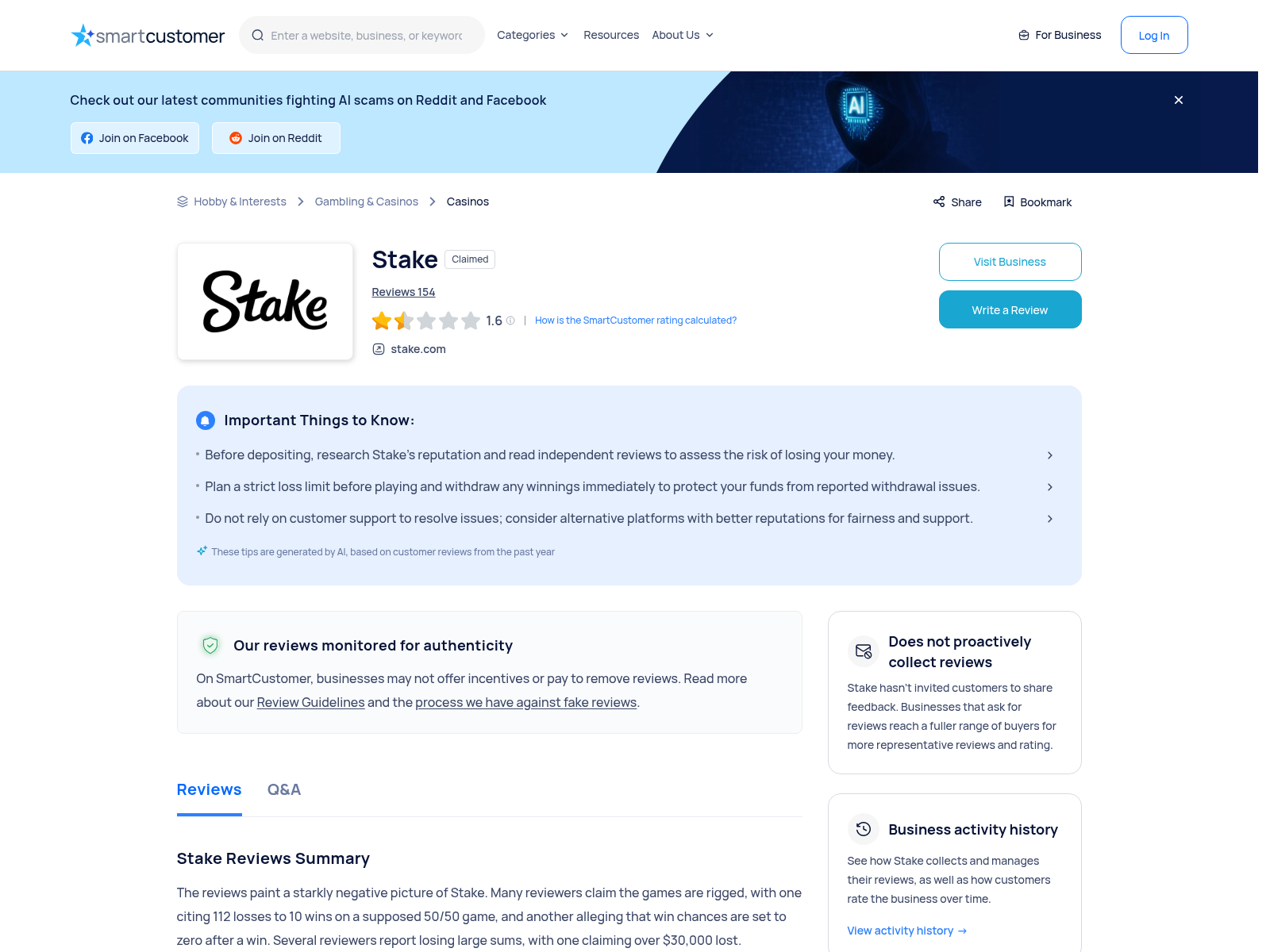
The independent review page was available when checked on 24 August 2026. That establishes the existence of user-review context for the exact domain, not the truth of each allegation, the identity of each reviewer or the representativeness of the rating. Reviews may concern different countries, products, dates and account circumstances.
A useful complaint chronology begins with the transaction, not the public post. Record the deposit or wager event, withdrawal request, verification request, operator response, promised deadline and final status. Remove unrelated personal details from public copies while retaining unedited originals privately. A complaint should state what remedy is requested: release of funds, explanation of a decision, correction of account data or confirmation of closure.
Use the internal complaints and scam-warnings guide to structure the record. The packet does not establish a local regulator process for adjudicating a dispute with this foreign operator, nor does it confirm a competent alternative-dispute body. Do not describe a review platform as an authority or assume that posting publicly creates a formal case.
Clone and impersonation checks
The exact address in the packet is stake.com. A convincing logo, colour scheme, copied game list or social-media profile is not enough. Look-alike domains may add words, swap characters, use misleading subdomains or send customers to an unrelated payment destination. Type the known address directly instead of following an unsolicited message.
| Clone check | Safer comparison | Warning sign |
|---|---|---|
| Address | Exact spelling of stake.com | Added words, character swaps or unfamiliar endings |
| Connection | Browser security information for the exact address | Certificate warning or forced download |
| Payment request | Recipient disclosed in the authenticated cashier | Personal wallet or unrelated recipient sent by message |
| Support | Contact path reached from the known account | Pressure through an unsolicited private profile |
| Verification | Request visible within the authenticated service | Documents requested through an unrelated link |
A padlock only indicates an encrypted connection to the displayed address; it does not prove regulatory approval. If the address differs, stop before entering a password or payment detail. Never reuse a password from email or banking services, and enable available account-security controls without assuming they eliminate operator or payment risk.
Main risks and unresolved questions
The largest risk is jurisdictional uncertainty: no current primary Trinidad and Tobago record in the packet matches the exact domain and operator. The second is foreign-record uncertainty because the cited Curaçao licence lacks a supplied current register extract, status history and expiry date. The third is transaction uncertainty because no deposit, verification or withdrawal test exists.
User reports add context but cannot resolve those gaps. The operator’s own website can identify its presentation, yet self-published claims do not independently prove legal status, payment performance or complaint outcomes. A lack of official adverse evidence should not be converted into a safety guarantee.
Practical exposure also includes currency conversion, payment-recipient ambiguity, account verification, changing terms, inaccessible redress and impersonation. Gambling losses are separate from fraud or payment disputes: losing a wager does not itself establish wrongdoing. Anyone experiencing loss of control should use responsible-gambling support or seek urgent help rather than attempting to recover losses through further play.
Evidence chronology and assessment method
| Date checked | Record | Evidential role | Result |
|---|---|---|---|
| 24 August 2026 | Commission FAQ | Primary local regulatory context | Online betting not presently contemplated; further guidance indicated |
| 24 August 2026 | Parliamentary Act entry | Primary legislation record | Official entry for Act No. 8 of 2021 confirmed |
| 24 August 2026 | Central Bank payment publication | Primary terminology context | Local payment-system language confirmed |
| 24 August 2026 | Exact service domain | Operator statement | Service presentation identified; other claims not independently proved |
| 24 August 2026 | Independent review page | User context | Review-page availability confirmed; allegations remain unproven |
The assessment separates primary records, operator statements and user context. Primary local material receives the greatest weight for local legal scope. Operator material can identify what the business presents but cannot verify itself. User material can reveal questions worth documenting but cannot establish a finding without corroboration.
Green would require current primary evidence supporting the precise domain and entity for the claim being made. Red would require an official adverse record or corroborated documented evidence. Neither threshold is met. Amber reflects open evidence, not a midpoint score or prediction. The full internal approach is set out in the assessment methodology.
Corrections, updates and cautious next step
The conclusion should change if a current Trinidad and Tobago record identifies the exact domain and company, if a competent foreign register confirms or rejects the supplied licence mapping, or if dated transaction evidence establishes a relevant payment or complaint outcome. Any correction should preserve the source, checking date, exact claim and reason for amendment.
Readers with a primary record that materially changes the entity, licence or local status can use the contact route. Screenshots without a visible date or source may be useful leads but are not automatically sufficient. Personal account numbers, identity documents and full payment credentials should not be sent with a correction request.
For adults who understand the unresolved local-authorisation and transaction risks and still choose to continue, proceed only through the verified internal route: Continue with route disclosure. Set a firm spending limit beforehand and never treat gambling as income or a way to recover losses.
Frequently asked questions
Is Stake licensed in Trinidad and Tobago?
No current primary Trinidad and Tobago record in the supplied evidence matches stake.com and Medium Rare N.V. The packet names Curaçao OGL/2024/1451/0918 as a foreign licence, which must not be represented as T&T authorisation.
Is Stake a scam or a legitimate service?
The evidence does not support either a scam finding or an unconditional safety endorsement. The service and named entity are identifiable, but local authorisation, current foreign-register status and transaction performance remain unconfirmed, so the signal is amber.
Are deposits and withdrawals confirmed for T&T customers?
No. The packet confirms no payment method, fee, limit, processing time or successful withdrawal for a Trinidad and Tobago customer, and no account or payment test was performed.
What should I do if a withdrawal is delayed?
Preserve the request time, amount, currency, status messages, verification requests and responses. Use the authenticated support path, state the remedy sought, and do not pay an unexpected fee sent through an unrelated message.
How can I avoid a clone website?
Compare the address character by character with stake.com, enter it directly, and reject added words, altered characters or unfamiliar endings. A copied logo or browser padlock does not prove that a website is authentic or locally authorised.
What evidence could change the amber signal?
A current primary local record matching the exact domain and operator, a competent foreign-register record confirming licence status, or corroborated documented adverse evidence could change the assessment. Undated screenshots or unverified user allegations alone would not be enough.
Trinidad and Tobago Police Service
WiPay Trinidad and Tobago