
Is Ruby Fortune Legit in Trinidad and Tobago?

Amber · the local authorisation and player outcome are not established
Short answer: Ruby Fortune cannot be confirmed as locally licensed for Trinidad and Tobago from the evidence reviewed. The Gambling Control Commission says important licensing and regulatory provisions remain unproclaimed, and its FAQ says online betting is not presently contemplated under the Act. Parliament records House approval of a Remote Gambling Order, but a Senate agenda listing expected debate does not prove the outcome or authorise Ruby Fortune. A foreign regulator lists the exact domain under Baytree Interactive Limited, yet that is not a Trinidad and Tobago permit. The appropriate signal is therefore amber: some identity and foreign-market evidence exists, but local authorisation, eligibility, payment performance and complaint outcomes remain open questions.
How to read the available evidence
The records address several separate issues. They provide foreign listing information for the exact domain and general information about Trinidad and Tobago’s developing regulatory framework. They do not establish that the same domain is permitted to accept customers locally, that a customer could complete a withdrawal, or that a complaint would have a particular outcome.
The available evidence does not establish a Trinidad licence, a local cashier, a completed withdrawal, a successful complaint, or an individual customer outcome. It also does not prove that Ruby Fortune is a scam. Absence of a local authorisation in the supplied records should be treated as an unresolved status question, not as proof of wrongdoing.
| Question | Evidence available | Limit |
|---|---|---|
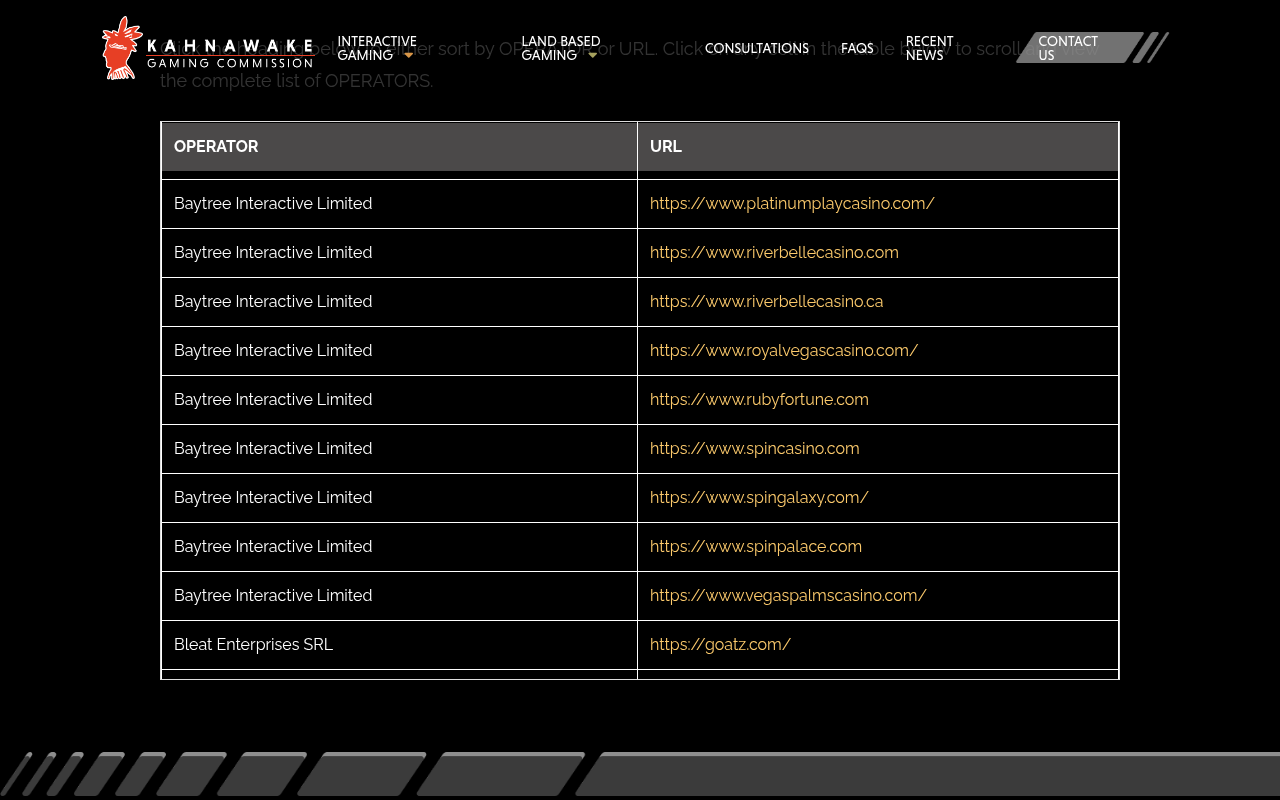
| What is the exact domain? | The foreign permit-holder record lists www.rubyfortune.com under Baytree Interactive Limited. | The record is not a Trinidad and Tobago permit. |
| Is there local authorisation? | The supplied Commission records describe the regulatory framework. | No supplied record names Ruby Fortune as locally licensed. |
| Can payouts be confirmed? | Ruby Fortune’s FAQ discusses withdrawals and source-of-wealth questions. | Terms or explanations are not evidence of a completed payout. |
Trinidad and Tobago regulatory position
The Commission website describes Parts I, II and X as in force and says that remaining licensing and regulatory provisions have not yet been proclaimed. That is a statement about the regulatory framework, not a brand-specific approval. It should not be converted into either a positive licence finding or a definitive enforcement conclusion about Ruby Fortune.
The Commission FAQ adds that online betting is not presently contemplated under the Act and that further guidance will follow. A website’s ability to register a user is not the same thing as local regulatory permission. A registration screen, geolocation result or payment option would not by itself prove that the exact domain is authorised for Trinidad and Tobago.
The supplied records do not contain an exact-domain authorisation for Ruby Fortune. Information published by the Commission should therefore be kept separate from statements made by the operator or a foreign regulator.
| Record or statement | What it supports | What it does not support |
|---|---|---|
| Commission status page | Some provisions are in force and remaining licensing provisions have not been proclaimed. | A Ruby Fortune licence or a conclusion about an individual account. |
| Commission FAQ | Online betting is not presently contemplated under the Act and further guidance is expected. | That every foreign site is unlawful, or that Ruby Fortune is locally approved. |
| Foreign permit-holder listing | A foreign authority lists the exact domain under Baytree Interactive Limited. | Trinidad and Tobago eligibility or local consumer protection. |
What the Remote Gambling Order records show
Parliament records House approval of the Remote Gambling Order on 30 September 2026. This is a legislative development, but it is not an exact-domain operator licence. A measure may create or amend a regulatory route without showing that a particular casino has completed an application, received approval or may accept customers in a specific territory.
The published Senate agenda for 2 October 2026 lists debate on the Remote Gambling Order as expected. An agenda shows planned parliamentary business. It does not establish that debate occurred, that the measure passed, that it came into force, or that Ruby Fortune was authorised.
| Parliamentary item | Documented point | Reason for caution |
|---|---|---|
| House record, 30 September 2026 | House approval of the Remote Gambling Order is recorded. | Approval is not an exact-domain licence. |
| Senate agenda, 2 October 2026 | Debate was listed as expected. | An agenda does not establish the debate’s outcome or legal effect. |
| Ruby Fortune | No supplied parliamentary record names the operator. | There is no basis to infer authorisation from a general legislative event. |
Exact-domain and foreign-operator identity
The Kahnawà:ke Gaming Commission’s interactive-gaming permit-holder page lists www.rubyfortune.com under Baytree Interactive Limited. It also warns that listed URLs may be inaccessible in some jurisdictions. This connects the precise web address with a named entity in a foreign regulatory listing.
That connection does not show that Baytree Interactive Limited holds a Trinidad and Tobago permit, that Trinidadian residents are accepted, or that a dispute would be handled under Trinidadian procedures. It also does not establish that every page, product or payment route on the domain has identical regulatory treatment.
Ruby Fortune’s own FAQ covers registration, withdrawals and source-of-wealth questions. Operator material can explain the stated process, but it remains an operator statement. It is not independent confirmation that a particular withdrawal succeeded or that Trinidad and Tobago customers are eligible.
Availability is not local legality
A website can be technically reachable without being locally licensed. Conversely, a foreign regulator’s record can identify an operator while leaving local access unresolved. The foreign listing’s warning about possible inaccessibility reinforces the need to check the terms that apply to the customer’s location.
A site-wide territorial restriction may differ from a game-provider restriction. An operator may apply one rule to account opening, another to deposits or withdrawals, and a separate rule to particular games or suppliers. The available evidence does not identify Ruby Fortune’s current Trinidad and Tobago eligibility rule.
Before creating an account, a reader should look for the applicable territory wording, contracting entity, verification requirements, withdrawal conditions and complaint route. If those details conflict, are unavailable, or change during registration, that uncertainty should be treated as material.
KYC, source of wealth and account conditions
The operator FAQ refers to registration, withdrawals and source-of-wealth questions. These subjects indicate that verification may form part of the stated process. They do not prove that a Trinidad and Tobago applicant will pass verification, what documents will be accepted, how long a review will take, or whether funds will be released.
Customers should retain the exact terms shown at registration, confirmation emails and any request for documents, while protecting sensitive identity information and avoiding unnecessary disclosure. No supplied record documents an account test or payout test. This assessment therefore cannot state that Ruby Fortune pays Trinidad and Tobago customers, refuses them, or has a particular processing time.
Payments and withdrawals: what remains unknown
The FAQ’s discussion of withdrawals is not a payment performance record. It does not confirm which Trinidad and Tobago payment methods are available, whether a local bank or card will be accepted, whether a deposit can be reversed, or whether a withdrawal will be completed. Payment availability can depend on the bank, payment provider, currency, verification status and territorial rules.
Before sending funds, read the terms for minimum and maximum amounts, identity checks, source-of-wealth requests, account-name matching, fees, processing stages, dormant-account provisions and restrictions applying to the customer’s location. If those terms are unclear, do not fill the gap with assumptions based on another country’s experience.
| Stage | Document to retain | Question it may help answer |
|---|---|---|
| Before deposit | Territory terms, contracting-entity details and payment conditions. | Does the stated process address Trinidad and Tobago customers? |
| Account verification | Request date, document list and submission confirmation. | What information was requested and when? |
| Withdrawal | Amount, method, timestamp, status and correspondence. | Is the transaction pending, rejected, cancelled or completed? |
| Escalation | Complaint reference and final response. | Has the internal process been used? |
How to assess a complaint without overclaiming
A complaint is an allegation unless a dated competent-source record establishes otherwise. A screenshot, forum post or social-media statement may show that someone made a claim, but it does not independently prove the cause, amount, account status or outcome. The available evidence contains no complaint volume, customer experience or completed dispute outcome for Ruby Fortune.
If a payment or account issue arises, preserve the transaction record and ask the operator for a clear written explanation. Keep communications factual and avoid sending documents through an unverified channel. When describing the matter publicly, separate confirmed facts from the customer’s report and do not label the operator fraudulent merely because a dispute is unresolved.
Overall Ruby Fortune assessment for Trinidad and Tobago
The evidence supports a cautious, open-evidence assessment. The exact domain appears in a foreign permit-holder record under Baytree Interactive Limited, and Ruby Fortune publishes FAQ material about registration, withdrawals and source-of-wealth questions. Those points are relevant but limited. They do not establish a Trinidad and Tobago licence, local eligibility, a local complaint mechanism, or successful payments.
The local Commission’s materials leave the regulatory position incomplete: remaining licensing and regulatory provisions are described as not yet proclaimed, while the FAQ says online betting is not presently contemplated and further guidance will follow. Parliament’s House record and Senate agenda show movement around a Remote Gambling Order, but neither record names Ruby Fortune or proves the required legal outcome.
Ruby Fortune should therefore not be presented as confirmed locally licensed or confirmed unsafe on the available evidence. The amber signal means the central question remains unresolved. Anyone considering an account should verify current local information, read the exact territorial and payment terms, and treat the absence of a documented Trinidad licence or payout test as a meaningful limitation.
gcctt.org · gcctt.org · ttparliament.org · ttparliament.org · gamingcommission.ca
Frequently asked questions
Is Ruby Fortune licensed in Trinidad and Tobago?
The supplied records do not establish a Trinidad and Tobago licence for Ruby Fortune or for the exact domain. A foreign listing under Baytree Interactive Limited is not a local permit.
Does House approval of the Remote Gambling Order approve Ruby Fortune?
No. The House record documents approval of the Order, but that is not an exact-domain operator licence and does not name Ruby Fortune.
Did the Senate approve the Remote Gambling Order?
The supplied Senate record is an agenda listing debate as expected on 2 October 2026. An agenda alone does not establish the debate’s outcome or the Order’s legal effect.
Does Ruby Fortune’s FAQ prove that withdrawals work in Trinidad and Tobago?
No. The FAQ discusses withdrawals and source-of-wealth questions, but no supplied record documents a Trinidad and Tobago account, payment method or successful withdrawal.
Does a foreign permit prove that Trinidadian players are eligible?
No. The Kahnawà:ke listing identifies the domain in a foreign regulatory context and warns that listed URLs may be inaccessible in some jurisdictions. It is not evidence of local eligibility.
Does the amber signal mean Ruby Fortune is a scam?
No. Amber means the evidence is open and does not support a confirmed local licence or a confirmed adverse finding. It is neither proof of safety nor proof of fraud.