
Pinnacle in Trinidad and Tobago: Legit or a Scam?
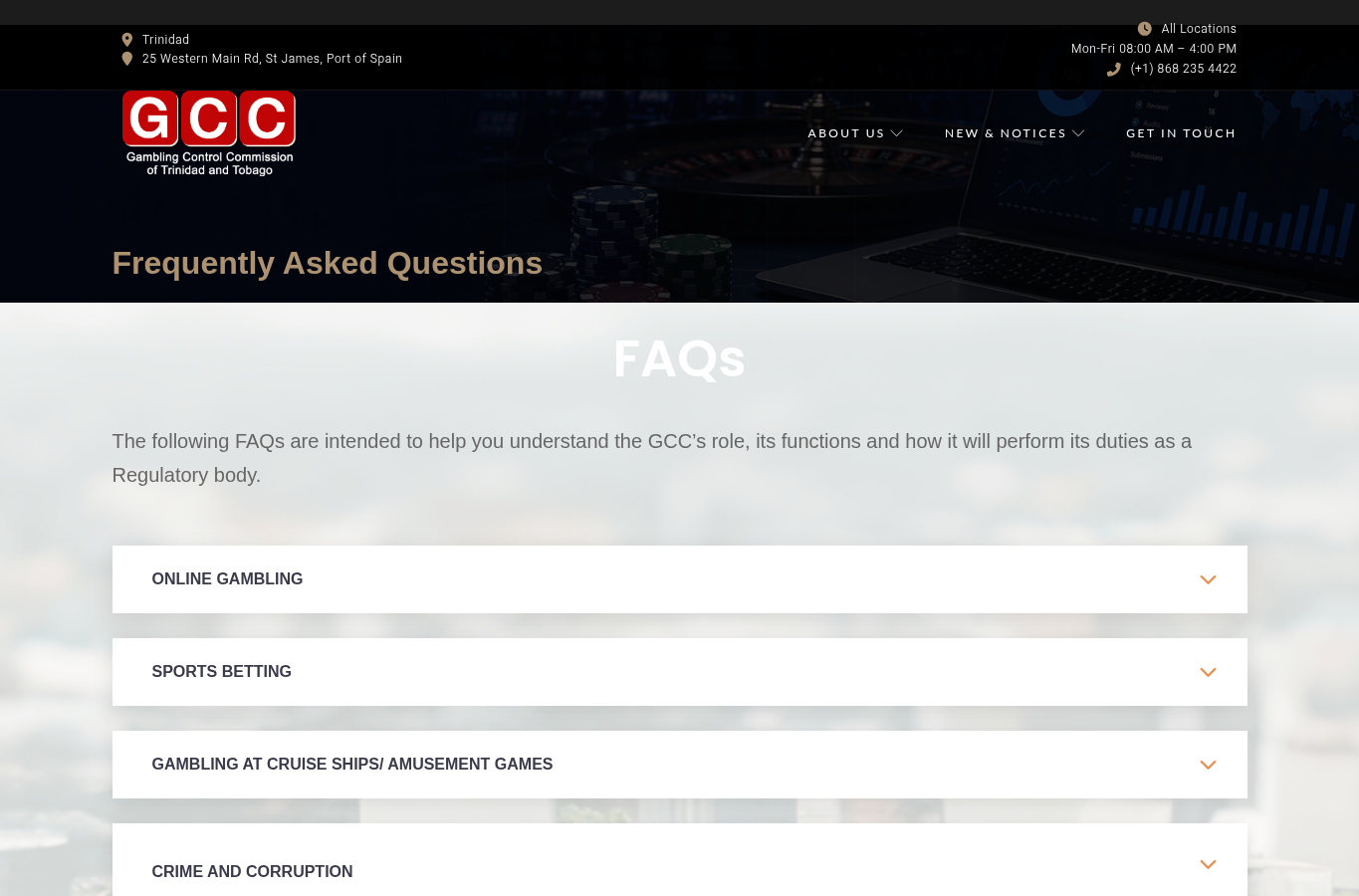
Two signals point in different directions. The exact domain, pinnacle.com, presents an established gambling service and identifies Ragnarok Corporation N.V. as its operator. However, the verified packet contains no current primary Trinidad and Tobago record matching that domain, operator and a local online gambling licence. The Gambling Control Commission has also stated that online betting is not presently contemplated and that further guidance will follow.
That contradiction prevents a simple “legit” or “scam” label. The domain is identifiable, but identity is not the same as local authorisation. No account, deposit or withdrawal test was performed, and foreign licensing material cannot establish permission to serve players in Trinidad and Tobago. The resulting signal is amber: important evidence exists, but the decisive local match remains open.

Verdict at a glance
| Question | Evidence-led answer | Confidence |
|---|---|---|
| Is pinnacle.com the domain examined? | Yes. The supplied operator record identifies the exact domain as presenting the service. | Moderate |
| Is the named operator verified by a Trinidad and Tobago primary record? | No. Ragnarok Corporation N.V. is an operator statement, not a locally matched primary record. | High |
| Is a Trinidad and Tobago online licence verified? | No current local licence matching the domain and operator was supplied. | High |
| Is it proven to be a scam? | No. The packet contains no official adverse finding or corroborated documented evidence establishing that conclusion. | High |
| Is local online play clearly authorised? | Not established. The Commission’s published position creates material legal uncertainty. | High |
| Were deposits or withdrawals tested? | No. Payment performance, verification times and cash-out reliability remain unknown. | High |
The bounded conclusion is therefore neither approval nor condemnation. It is possible to identify the service and review its own operator claim, but the evidence does not close the local legal and licensing gap. Anyone considering access should first read the licence and law guide, assess affordability, and avoid treating domain availability as regulatory permission.
Which evidence carries the most weight
The records do not all answer the same question. Primary Trinidad and Tobago material is strongest for local law and regulatory scope. Operator material can show what the service calls itself, but it cannot independently verify its own corporate or licensing claims. User-review material can reveal allegations worth checking, yet ratings and individual stories do not prove what happened.
| Evidence layer | What it supports | What it cannot establish |
|---|---|---|
| Gambling Control Commission FAQ | The Commission’s published position that online betting is not presently contemplated and further guidance will follow | A licence for this exact domain or permission for a particular player transaction |
| Act No. 8 of 2021 entry | The existence, assent and official publication entry for the Gambling and Gaming Control Act, 2021 | A domain-specific approval or a conclusion about every online gambling scenario |
| Central Bank payment paper | Local payment-system and card terminology | Acceptance by the service, successful deposits, chargeback rights or withdrawal performance |
| Exact-domain operator material | That pinnacle.com presents the service and states an operator identity | Independent corporate verification, local legality, solvency or fair complaint handling |
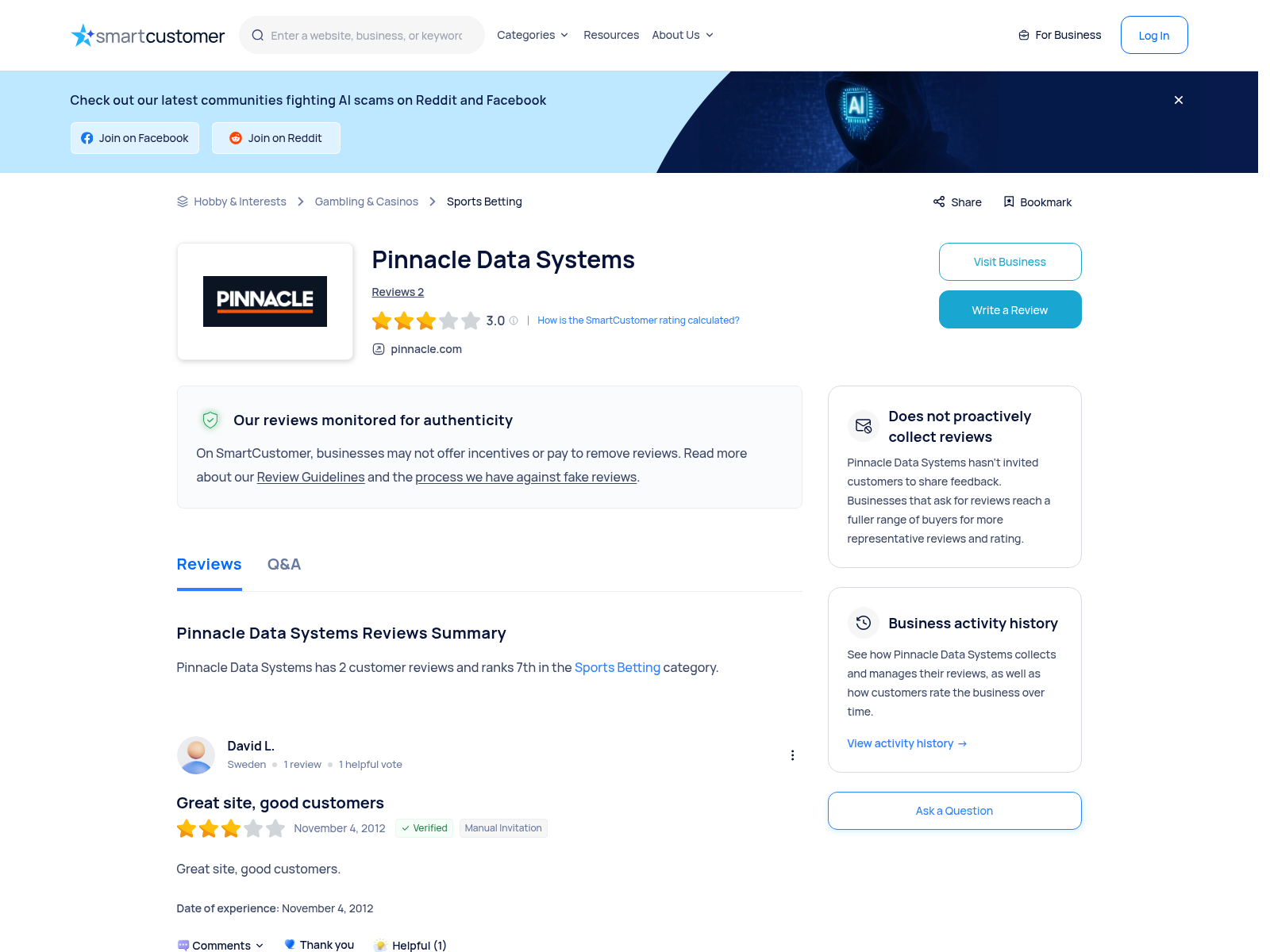
| Independent review-page context | That user reviews and allegations concerning the domain are available | Proof that any allegation is accurate, representative or relevant to a Trinidad and Tobago account |
The Gambling Control Commission FAQ was checked on 24 August 2026. The official Act No. 8 of 2021 publication entry was checked on the same date. These primary sources outweigh promotional language and review scores when the question is whether local authorisation has been established.
Domain, operator and licence match
A reliable licensing check requires three elements to line up: the precise domain, the legal operator and a current authorisation from the relevant authority. Here, only the first element is directly observable in the supplied operator record. The exact domain presents the gambling service. The name Ragnarok Corporation N.V. appears as an operator statement, while the packet describes the licence position only as a foreign licence claim.
| Matching element | Recorded position | Practical meaning |
|---|---|---|
| Domain | pinnacle.com | The review concerns this precise address, not a similar spelling or an advertisement redirect |
| Legal operator | Ragnarok Corporation N.V. | Self-declared identity; no current Trinidad and Tobago primary record supplied to confirm the match |
| Licence | Foreign licence claim | Jurisdiction-scoped and insufficient to prove local permission |
| Local authorisation | Not verified | No current primary local record joins the domain, entity and an online licence |
| Expiry date | Not supplied | Currency of any foreign claim cannot be assessed from the packet |
This missing three-way match is central. A foreign authorisation, even if genuine and current, answers questions within its issuing jurisdiction. It does not automatically settle Trinidad and Tobago law, local consumer remedies or whether a local regulator will accept a complaint. Conversely, the absence of a verified local match does not by itself prove fraud. It means the strongest requested assurance is unavailable.
Before entering credentials, type the domain independently and check every character. A copied logo, familiar colour scheme or similar name is not enough. If the address changes during registration, payment or sign-in, stop and repeat the check from the original domain. The scam-warning guide explains how to preserve evidence without relying on appearance alone.
Legal position in Trinidad and Tobago
The Commission’s FAQ says online betting is not presently contemplated and further guidance will follow. That is a significant local primary statement, but it should be read precisely. It does not name this service, grant it approval or record an adverse enforcement decision against it. It instead leaves the local online position unresolved for the purpose of a domain-specific legality verdict.
The Act’s official publication entry confirms Act No. 8 of 2021 and its assent. The verified packet does not include a provision-by-provision legal analysis, implementing decision or licence register entry that resolves access to this particular foreign service. For that reason, “the website loads” and “the operator claims a foreign licence” cannot be converted into “legal for residents”. Technical accessibility is not legal authorisation.
Players should distinguish three questions: whether gambling activity is regulated locally, whether a particular online operator is licensed for the market, and whether a payment provider permits the transaction. Those questions may produce different answers. The evidence available here resolves none of them in the operator’s favour beyond doubt. Anyone needing a legal determination should use official channels or qualified local advice rather than a promotional claim.
Payments, cards and deposit uncertainty
No supported list of deposit methods was supplied. It would therefore be unsafe to claim that local debit cards, credit cards, bank transfers, electronic wallets or any particular currency are accepted. The Central Bank’s payment-system paper supplies local terminology and context, but it does not verify transactions with this operator.
| Payment question | Verified answer | Sensible check before paying |
|---|---|---|
| Which methods are accepted? | Unknown from the packet | Read the cashier terms visible to the account and confirm with the payment provider |
| Are Trinidad and Tobago cards supported? | Not verified | Ask the issuer whether gambling transactions and foreign merchants are permitted |
| Which currency is used? | Not supplied | Check account currency, conversion rate and any issuer fee before confirmation |
| Are deposits instant? | Not tested | Do not rely on an estimated processing label as proof of settlement |
| Are payment details protected? | Not independently assessed | Confirm the exact domain and avoid payment after an unexpected redirect |
| Are chargebacks available? | Not established | Ask the issuer; do not assume a gambling dispute qualifies |
A small deposit does not validate the licence, and a successful card authorisation does not prove that withdrawals will work. Payment acceptance can merely show that an issuer and merchant processor allowed one transaction. Check limits, conversion costs, merchant descriptors and cancellation rules before committing funds. The broader payments guide covers these distinctions.
Withdrawals, verification and account controls
There was no account test, so no claim can be made about withdrawal speed, rejection rates, limits or document-review times. The packet also provides no supported know-your-customer list. Identity document, address, source-of-funds and payment-ownership requirements must therefore be treated as unknown until shown in the terms or requested through the account.
Before depositing, record the displayed withdrawal rules, minimum and maximum amounts, fees, account currency, document requirements and any restriction tied to bonuses. Save dated copies. If terms change after a request, the earlier record may help explain the sequence. Never send identity documents through an address or message channel that cannot be tied to the exact domain.
A delayed withdrawal is not automatically proof of a scam. It can involve verification, payment-provider processing, terms disputes or account restrictions. Equally, repeated requests for new documents, unexplained cancellation, pressure to deposit more, or an address change during verification deserve caution. Stop adding funds while the reason remains unresolved.
Use the operator’s stated complaint process first when safe to do so, ask for a case number, and request the exact contractual basis for any decision. Keep responses, transaction references and timestamps. Because no locally matched licence is verified, do not assume that a foreign regulator or Trinidad and Tobago authority will accept or resolve the dispute.
Complaint route and user allegations
The independent review-page record confirms that user-review context exists for the exact domain. It does not validate any rating or allegation, and sparse reports may be unrepresentative. Reviews can concern different countries, products, dates, payment methods or account facts. They should be used as leads for questions, not as verdicts.
For a complaint, assemble the exact domain, account identifier, transaction references, amount and currency, relevant terms, chronology, correspondence and requested remedy. Remove passwords, full card numbers and unnecessary identity data from copies. Submit a concise factual account to the operator and preserve the response.
If the matter concerns an unauthorised card transaction, contact the card issuer promptly. If it involves suspected impersonation, false payment instructions or account takeover, preserve the address and messages before blocking contact. The complaints and scam warnings route provides a structured checklist. Urgent harm or loss of control calls for the urgent help route, not further gambling.
Clone checks and practical warning signs
The strongest clone check begins with the full address, not the logo. Confirm pinnacle.com character by character, including the ending. Treat extra words, substituted letters, unusual hyphens and unrelated subdomains as different addresses. Search advertisements and social-media messages can lead to lookalikes, so do not use them as proof of identity.
Check whether registration, sign-in and payment remain on the expected address or move to a clearly explained service provider. An unexplained switch deserves a pause. Do not install remote-access software, share one-time codes, reveal a password, or pay an additional “release fee” solely because a message promises to unlock a withdrawal.
Warning signs should still be evaluated in context. A third-party payment processor is not automatically fraudulent, and a document request can be part of verification. The concern rises when the domain cannot be tied back to the service, instructions conflict with published terms, support refuses written explanations, or payment is demanded through an unrelated personal account.
If all checks are satisfactory and an adult still chooses to proceed, use the single recorded access route: Continue through disclosure. This is not a statement of local licensing, guaranteed access or payment reliability. Set a firm loss limit first and consult responsible gambling support if play is becoming difficult to control.
Evidence chronology, unknowns and correction path
All five supplied records were checked on 24 August 2026. The primary regulatory FAQ and official Act entry establish the local framework available in the packet. The Central Bank paper supplies payment terminology. The exact-domain record establishes what service appears at the address, while the independent review record supplies context only. No later licence match, enforcement notice, account test or payment test was supplied.
| Date checked | Record | Role in the finding |
|---|---|---|
| 24 August 2026 | Gambling Control Commission FAQ | Primary evidence of the Commission’s stated online-betting position |
| 24 August 2026 | Act No. 8 of 2021 publication entry | Primary confirmation of the Act and official publication record |
| 24 August 2026 | Central Bank payment paper | Primary local payment-system context |
| 24 August 2026 | pinnacle.com | Operator evidence of the exact service domain and its presentation |
| 24 August 2026 | Independent review page | User context only; allegations and ratings remain unproven |
Material unknowns include local eligibility, the status and expiry of any foreign licence, corporate registration details, accepted payment methods, currencies, fees, withdrawal performance, verification requirements, complaint outcomes and account restrictions. No personal playing experience is claimed.
The amber signal should change only with stronger evidence. A current primary record matching the exact domain, legal entity and relevant authorisation could support a greener assessment. An official adverse record naming the domain or corroborated documented evidence could support red. Until then, uncertainty is the accurate result.
Corrections should identify the disputed statement and provide a dated primary record or complete supporting document through the contact route. Promotional screenshots, undated licence badges and isolated reviews are insufficient by themselves. The methodology explains the hierarchy used to separate primary records, operator statements and user context.
Frequently asked questions
Is Pinnacle a scam or legit?
The supplied evidence does not prove that the service is a scam, but it also does not establish a current Trinidad and Tobago licence for the exact domain and named operator. The appropriate signal is amber because the local domain-operator-licence match remains open.
Is Pinnacle legal in Trinidad and Tobago?
Local legality is not established by the packet. The Gambling Control Commission says online betting is not presently contemplated and further guidance will follow, while no current primary local record was supplied that authorises this exact domain and operator.
Who operates pinnacle.com?
The service states that Ragnarok Corporation N.V. is the operator. This is an operator statement; no current Trinidad and Tobago primary record in the packet independently matches that entity to a local online licence.
Are deposits and withdrawals proven to work?
No. No account, deposit or withdrawal test was performed, and no supported list of payment methods, currencies, fees or processing times was supplied. A successful deposit would not by itself prove reliable withdrawals.
What should I do if a withdrawal is delayed?
Stop adding funds, save the terms and transaction records, ask the operator for the exact reason and a case number, and keep all correspondence. Contact the payment provider promptly for an unauthorised transaction, but do not assume that chargeback rights apply.
How can I avoid a clone website?
Check pinnacle.com character by character, distrust altered spellings and unexplained address changes, and never share passwords or one-time codes. A copied logo or familiar design does not establish that a website belongs to the operator.
Trinidad and Tobago Police Service
WiPay Trinidad and Tobago