
LeoVegas in Trinidad and Tobago: identity, legality and risk checks
An advert on a phone can make a gambling service appear straightforward: tap, register, deposit and play. The important journey is less visible. Before entering personal or card details, follow the advert through every redirect and confirm that the final address is leovegas.com. A familiar design, search result or promotional name does not establish who operates the service, whether local play is accepted lawfully, or which rules would govern a dispute.
The evidence supports an amber signal, not a clean local approval and not a finding of fraud. The exact domain presents the LeoVegas service, but no current primary Trinidad and Tobago record supplied for this assessment matches that domain to the stated operator. Foreign registration or licensing material, where shown by the service, remains limited to the named foreign jurisdiction. No account, deposit or withdrawal test was performed.

Verdict at a glance
| Question | Evidence-led answer | Confidence |
|---|---|---|
| Is the named service visible at the exact domain? | Yes. The operator-controlled domain presents the service. | Limited to domain presentation |
| Is a Trinidad and Tobago online licence verified? | No current primary local record in the packet matches the exact domain and operator. | Open evidence |
| Is it proven to be a scam? | No. The supplied records do not establish fraud. | No adverse official finding supplied |
| Is it proven locally legal for a player to use? | No. The Commission says online betting is not presently contemplated and further guidance will follow. | Primary statement, but not individual legal advice |
| Were deposits or withdrawals tested? | No. | Confirmed limitation |
“Legit” can describe several different things: a real domain, an identifiable business, a foreign licence, a functioning payment path or lawful availability in the player’s location. Those questions must not be collapsed into one label. The domain evidence answers only the first question directly. The local legal and licensing match remains unresolved, so amber is the proportionate signal.
Anyone considering registration should first read the local licence and law guide. If uncertainty remains material, do not deposit merely because an advert, application listing or review score looks reassuring.
From mobile advert to final address
The acquisition trail deserves attention because a player may encounter the name in an advert, social post, message, search result or application before seeing the final web address. Record the address shown immediately after the tap and again after every redirect. The destination should end at leovegas.com, with no added word, substituted character or unrelated ending.
| Checkpoint | What to record | Warning sign |
|---|---|---|
| Advert | Platform, date and visible advertiser name | Urgent claims, guaranteed winnings or pressure to deposit |
| First tap | Initial address and any tracking redirect | A misspelt or unrelated domain |
| Registration screen | Final address before personal data is entered | Address changes after the form opens |
| Payment screen | Address, currency, payee wording and amount | Unexpected merchant name or unexplained currency conversion |
| Return visit | Address reached from a fresh bookmark | A different domain from the original session |
A secure connection symbol only indicates encryption between the browser and the current address. It does not prove that the address belongs to the intended business or that gambling is authorised locally. Do not rely on colour, crown imagery, typography or a copied logo. Those visual elements can be reproduced.
The safest practical method is to type the known domain manually, inspect it character by character and create a bookmark only after verification. Do not use links from unsolicited messages. Screenshots of the advert, redirects, registration terms and cashier can later help establish what was represented at the time.
Domain, operator and licence match
Three elements require separate proof: the exact domain, the legal entity accepting the customer, and the licence that covers both the entity and relevant activity. The operator statement supports that the named service appears at leovegas.com. It does not independently prove the full legal entity chain, Trinidad and Tobago availability or local authorisation.
The supplied operator description is LeoVegas Gaming plc / market entity. The wording itself signals that the contracting entity may vary by market. Before accepting terms, locate the legal entity named in the registration or account terms, its registered address, the governing law and the regulator named for complaints. If those details differ between the footer, terms and cashier, pause and request clarification before depositing.
| Required match | What is supported | What remains open |
|---|---|---|
| Domain | leovegas.com presents the named service | Whether every advert or application route lands there |
| Contracting entity | A foreign operator or market entity is indicated | The precise entity offered to a Trinidad and Tobago resident |
| Local licence | None verified in the supplied primary records | Whether any later local permission or guidance applies |
| Foreign licence | Registrations may vary by jurisdiction | Scope, current status and relevance to local play |
| Transaction counterparty | Not tested | Merchant descriptor and entity receiving funds |
A foreign licence may provide rules for a particular entity and territory, but it should not be presented as a Trinidad and Tobago licence. It also does not automatically resolve access, consumer remedies, taxation, payment acceptance or enforcement locally. The amber signal reflects these unresolved links rather than an accusation against the business.
Is it a scam or a legitimate service?
The evidence does not support calling the service a scam. No official adverse record or corroborated documented finding of fraud was supplied. Equally, the records do not justify a broad “fully legitimate in Trinidad and Tobago” conclusion. The responsible answer is conditional: the exact domain appears to be an operating service, while the local operator-and-licence match is unverified.
User reviews can identify issues worth checking, such as account access, verification delays, bonus disputes or withdrawals. They cannot by themselves establish what happened, whether the reviewer used the exact domain, or whether contractual and verification requirements were met. The captured review-page availability is therefore context only, not proof for or against the service.
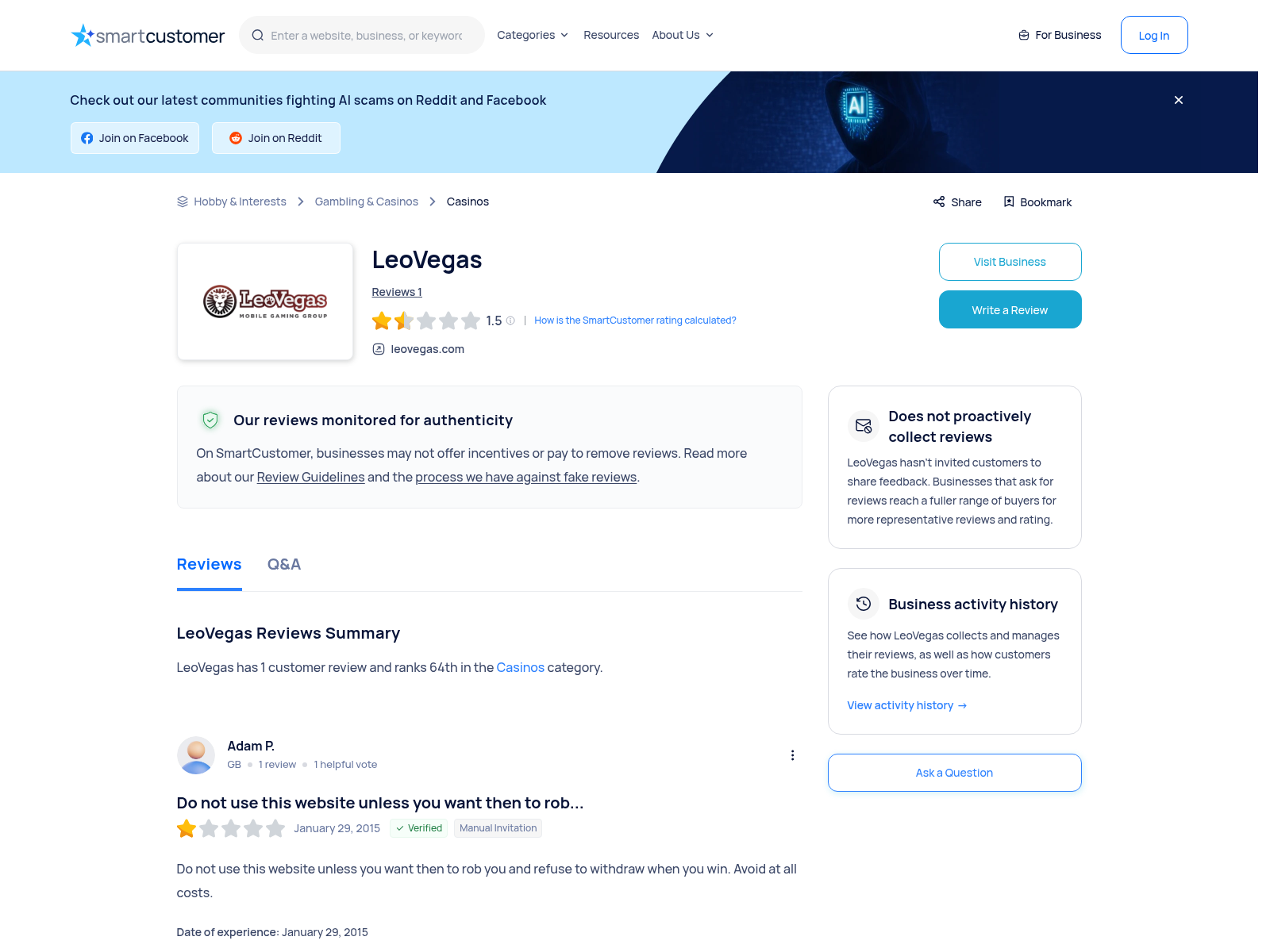
For a practical decision, ask whether the domain, entity, rules, currency, verification process and complaint destination are disclosed consistently. If any one of those changes after registration, preserve the earlier version and stop further payments. See the scam-warning and complaint checks for signs that require escalation.
Trinidad and Tobago legal position
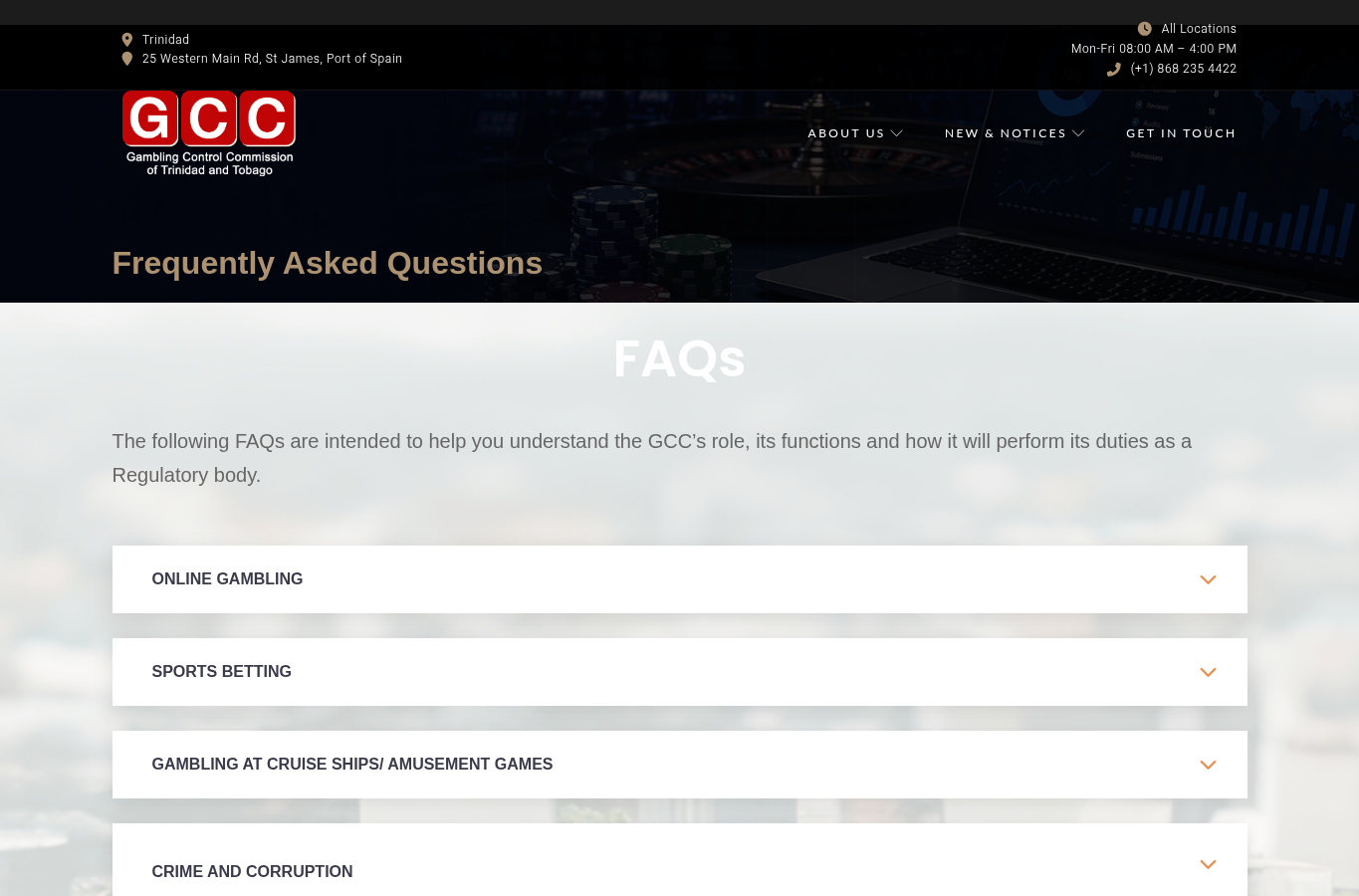
The current local evidence does not establish a licence for this exact online domain. The Gambling and Betting Control Commission states in its official frequently asked questions that online betting is not presently contemplated and that further guidance will follow. That statement is highly relevant to local uncertainty, but it is not a personalised legal determination about an individual player or transaction.
The legislative anchor in the packet is the official entry for the Gambling (Gaming and Betting) Control Act, 2021. Its existence should not be converted into a claim that a particular foreign website is approved, prohibited or licensed without a competent, current record making that connection.
Local legality therefore remains an open-evidence issue. A player should distinguish website accessibility from legal authorisation: being able to load a registration screen is not a regulatory decision. Geolocation acceptance, currency display and successful card authorisation are also not substitutes for a licence record. Recheck official guidance before acting, especially if the terms, local rules or regulatory position have changed since 24 August 2026.
Payments, cards and currency exposure
No payment method was tested, and the evidence packet does not confirm which options are offered to a Trinidad and Tobago account. Any list seen for another country could be inaccurate locally. The cashier shown after sign-in is an operator statement, not proof that a bank will authorise the transaction or that withdrawals use the same route.
The Central Bank publication on the payments system in Trinidad and Tobago provides local payment-system terminology. It does not endorse gambling payments or this service. Use it as background for understanding local rails, then obtain the actual charges, currency and restrictions from the financial institution handling the transaction.
| Payment risk | Question to answer before paying | Evidence to retain |
|---|---|---|
| Currency conversion | Is the account charged in TTD or another currency? | Cashier quote and bank conversion entry |
| Merchant identity | What name will appear on the statement? | Payee disclosure before confirmation |
| Fees | Are issuer, intermediary or operator fees possible? | Fee screen and account statement |
| Reversals | What is the formal dispute route? | Bank reference and operator response |
| Withdrawal route | Must funds return to the original method? | Cashier rules dated before deposit |
Never assume a small successful deposit proves that a larger withdrawal will work. Set a deposit ceiling independent of advertised limits, avoid borrowed money and do not send additional funds solely to “unlock” a balance without a clear contractual basis. The payments guide explains how to document exchange rates, descriptors and failed transactions.
Withdrawals and identity verification
There was no account registration, identity check or withdrawal test. Processing speed, document acceptance and payout reliability are therefore unknown. A displayed estimate should be treated as an operator statement until a transaction is completed under comparable conditions.
Before depositing, read the withdrawal rules and identify minimum and maximum amounts, pending periods, verification triggers, source-of-funds requirements, dormant-account terms and any bonus-linked restrictions. Save a dated copy. Confirm whether the name on the payment method must match the account and whether expired or virtual cards create a different payout route.
Identity verification can legitimately involve proof of identity, address, payment ownership or source of funds. The unresolved issue is not whether checks may occur, but whether the requested documents, secure submission channel, retention terms and responsible entity are clearly disclosed. Redact information that is not required, where permitted, and never send credentials or one-time security codes.
If a withdrawal is delayed, do not create duplicate accounts or vary personal details. Record the request time, amount, status changes, document submissions and every response. Ask for the precise outstanding requirement and the term supporting it. A delay is not automatically fraud, but repeated unexplained requests or a demand for unrelated advance payment should trigger caution and a stop to further deposits.
Complaints and evidence preservation
Start with a concise written complaint to the entity named in the account terms. Include the account identifier, disputed amount, transaction dates, requested resolution and a reasonable response date. Avoid unsupported accusations; describe observable events and attach only relevant records.
| Stage | Action | Record to keep |
|---|---|---|
| 1. Operator support | Request a case number and written reason | Transcript, email headers and case reference |
| 2. Formal complaint | Use the procedure in the applicable terms | Submitted text, attachments and timestamp |
| 3. Named regulator or resolver | Verify that it covers the entity and dispute | Licence entry, referral and response |
| 4. Payment provider | Ask about transaction-dispute options | Statement, authorisation details and deadlines |
| 5. Local guidance | Check the competent authority's current position | Dated official guidance |
A complaint route shown for another market may reject a case if the contracting entity or territory falls outside its remit. Verify jurisdiction before sending sensitive documents. Do not publish identity files or full card details in public reviews. Public allegations remain allegations unless a competent body establishes them.
For help organising a record, use the complaints and scam warnings guide. If gambling is causing immediate financial or personal harm, stop payments and use urgent help rather than continuing a dispute through play.
Unknowns, clone checks and practical limits
The principal unknowns are the exact contracting entity offered locally, current local acceptance, any applicable foreign licence, available payment methods, currency treatment, verification sequence, withdrawal performance and effective dispute forum. These gaps prevent a green assessment.
Clone protection begins with the address. Reject domains that add hyphens, extra words, unusual endings or lookalike characters. Check the address again when opening the cashier or support area. A clone may copy the logo, game imagery, terms or customer-service language while directing payment elsewhere. Never install remote-access software at the request of supposed support staff, and never share a password or one-time code.
The single contextual route to the service is available only after these checks: Continue via disclosure. Treat the destination as a fresh verification point, not as an endorsement, and confirm the final address before entering data.
Personal controls matter even where identity evidence is satisfactory. Decide the maximum affordable loss before registration, do not chase losses and use available blocking or exclusion tools if control is weakening. The responsible gambling guidance covers practical limits and support options.
Evidence chronology and assessment method
All five supplied records were checked on 24 August 2026. The assessment first separated primary local material from operator statements and user context. It then tested whether the exact domain, contracting entity and licence formed a documented chain. They did not form a current Trinidad and Tobago chain, so the result remained amber.
| Evidence | Role in the assessment | Limitation |
|---|---|---|
| Commission guidance | Primary evidence of the stated online-betting position | Not an entity-specific legal ruling |
| 2021 Act entry | Primary evidence of the official legislative record | Does not itself match this domain to a licence |
| Central Bank publication | Primary background on local payment terminology | Does not approve a casino or transaction |
| Exact-domain observation | Operator evidence that the service is presented there | Not independent proof of identity or local legality |
| Review-page capture | Context for possible user-reported themes | Ratings and allegations are not verified facts |
No personal account, payment, verification or withdrawal experience was used. No conclusion was drawn from an advert’s appearance, an application listing or a review score. The signal would warrant reconsideration if a current primary record precisely matched the domain and contracting entity, or if an official adverse decision established a material problem.
Corrections should identify the disputed statement, provide a dated primary record where possible and explain the exact domain, entity and jurisdiction it covers. Send that material through the contact route. A later foreign licence alone would not resolve the local question unless its territorial relevance and the customer’s contracting entity were also clear.
Frequently asked questions
Is LeoVegas a scam or legitimate?
The supplied evidence does not prove a scam and contains no official adverse finding against the exact domain. The domain presents a functioning service, but the local operator-and-licence match is unresolved. That supports an amber assessment rather than either a fraud accusation or an unrestricted endorsement.
Is LeoVegas legal in Trinidad and Tobago?
No current primary record supplied here verifies a Trinidad and Tobago online licence for the exact domain and operator. The Commission says online betting is not presently contemplated and further guidance will follow. Accessibility or payment acceptance should not be mistaken for local authorisation.
Which address should I verify before registering?
The expected exact domain is leovegas.com. Check every character after an advert redirect and again before registration or payment. A padlock does not prove identity, and a copied logo does not make a different domain genuine.
Are deposits and withdrawals confirmed to work locally?
No. No account, deposit or withdrawal test was performed, and no local payment-method list was verified. Confirm currency, fees, merchant wording, verification rules and the withdrawal route before committing funds.
What should I do if a withdrawal is delayed?
Save the request time, amount, status history, terms and correspondence. Ask support for a case number, the precise outstanding requirement and the contractual basis. Do not make further deposits merely to release funds, and verify any regulator or dispute body against the entity in your terms.
How can I report a correction or new licence record?
Use the contact route and provide the exact disputed claim plus a dated primary record. The record should identify the domain, legal entity, jurisdiction, activity and current status; a general brand statement or undated image is not enough.
Trinidad and Tobago Police Service
WiPay Trinidad and Tobago