
Cloudbet: account access, legality and evidence review
A locked account can turn an ordinary gambling session into a serious access problem. If funds appear in the balance but the account holder cannot sign in, complete verification or obtain a withdrawal decision, the urgent questions are practical: which domain was used, who controls the account, what records exist, and where can the matter be escalated?
The evidence available as at 24 August 2026 confirms that cloudbet.com presents the service. It does not establish a current operator identity, a Trinidad and Tobago online gambling licence, successful withdrawals or local regulatory protection. The resulting signal is amber: important matters remain open rather than proven safe or proven fraudulent.

Evidence verdict at a glance
The question “is Cloudbet a scam or legit?” cannot responsibly be answered with a simple yes or no from this packet. The exact domain is identifiable, but domain identification is not the same as verifying the legal entity, licence or treatment of a particular account. No competent official record supplied here identifies cloudbet.com as holding a Trinidad and Tobago online licence.
| Question | Evidence available | Finding |
|---|---|---|
| Is cloudbet.com the reviewed domain? | The domain presents the named service | Confirmed only at domain level |
| Is the current operator identified? | Current terms were not verified in the packet | Unresolved |
| Is a Trinidad and Tobago online licence verified? | No matching primary record was supplied | Not verified |
| Was an account, deposit or withdrawal tested? | No transactional test was performed | Unknown |
| Is fraud established? | No official adverse finding or corroborated case record was supplied | Not established |
An amber result is not approval. It means that the evidence does not support either a green local-licensing conclusion or a red fraud conclusion. A person considering the service should resolve identity, terms, eligibility and withdrawal conditions before sending money. Anyone already locked out should preserve records before attempting repeated changes to the account.
Start with the exact domain and account trail
The reviewed address is cloudbet.com. Similar spelling, extra words, different endings, shortened links and advertisements can lead elsewhere. A familiar logo is weak evidence because imagery can be copied. Type the address independently, inspect the full domain before entering credentials, and do not rely on a message link received after an account problem.
The supplied operator-level record says only that the exact domain presents the service. It does not prove the current legal entity, local availability, licence or safety. That distinction matters during a locked-account incident: support correspondence should be matched against the same domain, while the governing entity and dispute terms should be taken from current contractual material and retained with a date.
For an existing account, record the address displayed during registration, deposit, verification and sign-in. Keep confirmation emails, transaction identifiers and support ticket numbers. If different domains appear at different stages, stop and establish why before supplying more documents or money.
Operator identity and licence match remain open
A reliable licence check requires a chain connecting the exact domain, the legal entity and a current authorisation. That chain is incomplete. The operator identity requires a current terms re-check, and no current primary Trinidad and Tobago record in the packet matches the domain to an authorised online operator.
| Element requiring a match | What is established | What still needs verification |
|---|---|---|
| Trading name | The named service appears at the exact domain | Whether the name is used by the contracting entity |
| Legal entity | None verified from current terms | Full registered name, address and company details |
| Licence | No local online licence verified | Regulator, licence number, scope, status and expiry |
| Territorial eligibility | Not established | Whether residents of Trinidad and Tobago are accepted under current terms |
| Dispute forum | Not established | The competent body and governing contractual route |
A foreign licence claim, even if later confirmed, would remain jurisdiction-specific. It would not automatically establish authorisation in Trinidad and Tobago or guarantee that a local resident can obtain regulatory assistance. Licence badges and footer text should therefore be checked against the named regulator’s own current register, with the domain and entity compared character for character.
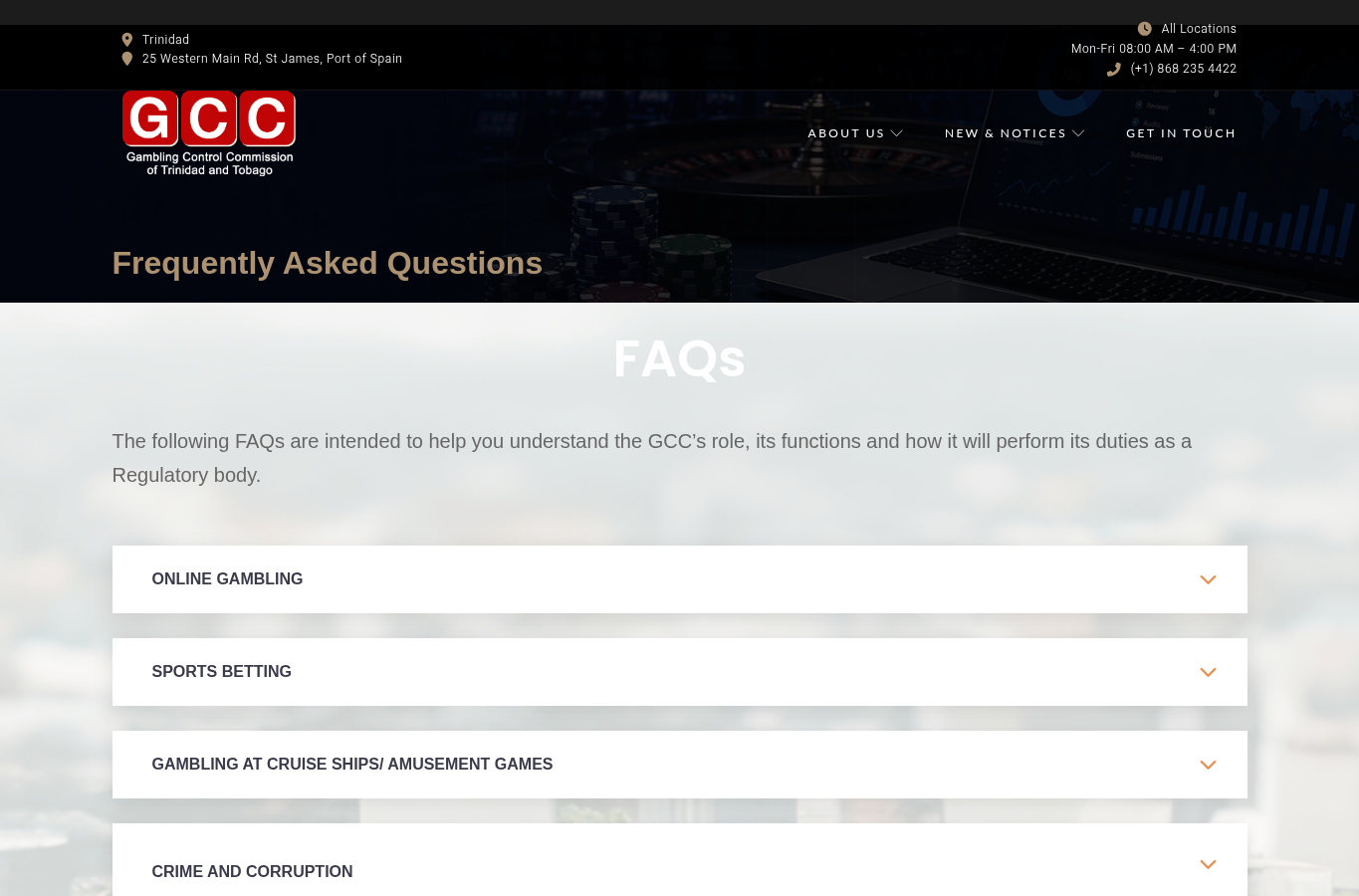
The available primary guidance from the Gambling and Gaming Control Commission says that online betting is not presently contemplated and that further guidance will follow. The Commission’s official online-betting guidance is more relevant to local legal status than marketing language or user ratings.
Is it legal for players in Trinidad and Tobago?
No supplied record supports a statement that the service is locally licensed. It would also be too broad to convert the absence of a verified online licence into a definitive conclusion about every possible act by an individual player. Operator authorisation, player conduct, payment handling and enforcement can involve different legal questions.
Act No. 8 of 2021 is available through the Parliament of Trinidad and Tobago publication entry. The record establishes the Act and its official publication trail; it does not establish a licence for this domain. Readers needing a decision about personal legal exposure should obtain advice based on their circumstances rather than treating foreign availability as local permission.
The practical conclusion is narrower: local authorisation has not been verified, and the regulator’s published position says online betting is not presently contemplated. That creates uncertainty around supervision, complaints and remedies. A service accepting registration or displaying local currency would not, by itself, cure that evidential gap.
More detail on the distinction between legislation, licensing and access is available under licence and law. The central check remains the same: find a current primary record connecting the exact domain and contracting entity to the claimed permission.
KYC and a locked-account incident
No account test was performed, so there is no evidence that a particular identity check was requested, passed, failed or delayed. KYC requirements, document types and review times are therefore unknown. Do not assume that successful registration or deposit means verification is complete.
If access is restricted, create a chronology before sending further documents. Record the last successful sign-in, the restriction message, the balance shown, pending bets, deposit references, withdrawal attempts and every support response. Preserve original files and full email headers where possible. Screenshots should include the date, visible domain and relevant status without exposing them publicly.
| Stage | Record to preserve | Reason |
|---|---|---|
| Registration | Confirmation, accepted terms and domain | Links the account to the conditions shown at sign-up |
| Identity review | Request, submission receipt and status | Shows what was requested and when it was provided |
| Deposit | Amount, method, timestamp and transaction reference | Connects the payment to the account |
| Account restriction | Full message and sign-in address | Defines the stated access problem |
| Withdrawal | Request amount, status and any reason supplied | Separates a pending request from a refusal |
| Support | Ticket number, complete thread and promised action | Creates an escalation trail |
Send identity material only through a channel independently confirmed from the exact domain. A sudden request through social media, a messaging application or an unrelated address is a warning sign. Never pay a supposed tax, unlock fee or verification charge merely because an unsolicited contact promises to release the balance.
Payments, balances and withdrawal uncertainty
The packet does not verify any available deposit method, currency, fee, minimum, processing time or withdrawal limit. It also contains no successful or failed withdrawal test. Payment claims should consequently be checked in the account and current terms before a deposit, not inferred from old reviews or general cryptocurrency usage.
A displayed balance is useful evidence of what the interface showed at a particular time, but it is not proof that funds are immediately withdrawable. Bonus rules, unsettled bets, identity checks, source-of-funds enquiries and account restrictions may affect a request; none is documented here for a specific account. Conversely, a generic reference to verification does not prove that an indefinite delay is justified.
The Central Bank’s report on the payments system in Trinidad and Tobago supplies local payment terminology, not evidence that any listed payment rail is accepted by the service. Banking familiarity must not be mistaken for operator support or chargeback eligibility.
Before paying, note the receiving descriptor, currency conversion, network, refund terms and whether the method offers a dispute mechanism. After paying, compare the external transaction record with the account ledger. For further practical distinctions, consult payments guidance. Do not send another deposit to “verify” an account or accelerate a withdrawal unless the requirement is independently supported and understood.
Complaints and escalation when access is blocked
Begin with a concise written complaint to the service’s verified support channel. State the account identifier without publishing credentials, the date access changed, the disputed amount, the steps already completed and the remedy requested. Ask for the contractual reason, the current status of verification, any outstanding requirement and the applicable escalation route.
Allow the stated response period if one is documented, but preserve every deadline. If the answer cites a term, save the version supplied and compare it with the terms retained at registration. If no operator identity or competent dispute body can be confirmed, record that as part of the unresolved complaint rather than selecting a regulator based on a logo.
User-review material may help identify questions to ask, but it remains allegation-level context. A rating does not prove misconduct, and an individual report may be incomplete, unverifiable or unrelated to Trinidad and Tobago. Equally, positive comments do not prove that a locked account will be resolved.
Use the complaints and scam-warning process to organise evidence and escalation. If there is suspected impersonation, unauthorised payment activity or identity theft, contact the relevant financial provider or competent authority promptly. Do not threaten, publish sensitive documents or misstate an allegation as a finding.
Clone, impersonation and recovery-scam checks
Account-access problems attract impersonators who promise to recover funds. Treat unsolicited “agents”, private-message support accounts and guaranteed recovery offers as separate risks. The verified domain in this packet does not validate any person contacting a player elsewhere.
Check the complete spelling of the address, the certificate connection, the destination of every sign-in form and the sender domain of account email. Do not install remote-access software, share one-time codes or reveal a wallet recovery phrase. A recovery service demanding cryptocurrency in advance should not be treated as official merely because it repeats account details that may have appeared in a complaint.
The strongest warning signs are a changed domain during sign-in, pressure to act immediately, a demand for an additional payment to release funds, requests for secrets that legitimate support should not need, or refusal to provide a ticket trail. When uncertain, navigate independently to the known domain and begin a fresh support request.
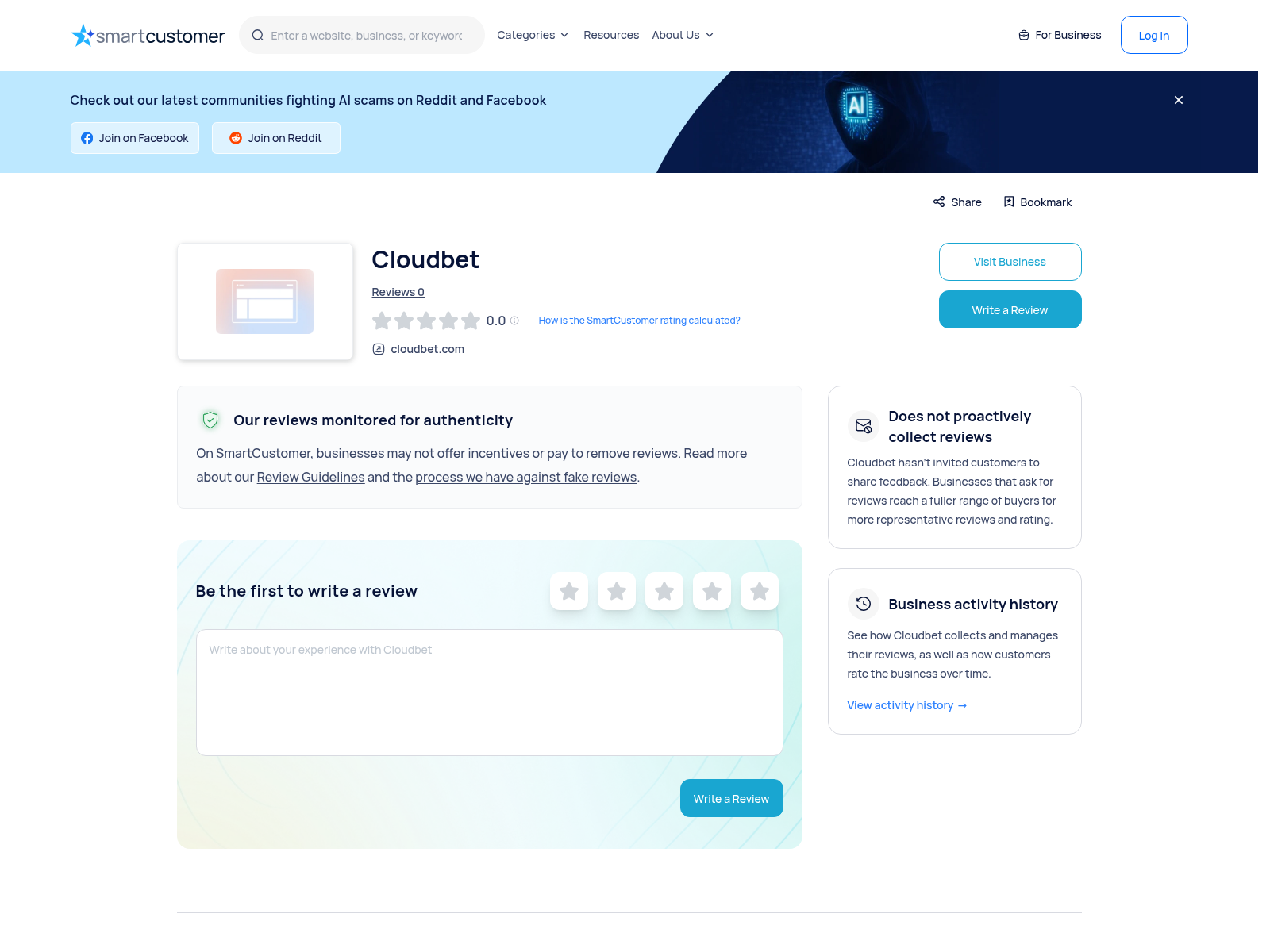
The contextual capture shown earlier relates to a review page for the exact domain. It is not a regulator record, an account ledger or proof of any allegation. Clone checks should rely on technical and documentary matches, not on whether a story sounds similar to another user’s experience.
Main risks and unresolved facts
The central risk is incomplete accountability. The exact service domain is known, but the current contracting entity, licence claim, territorial eligibility and dispute forum are unresolved. There is no local primary match granting an online licence, and no tested evidence about deposits, KYC or withdrawals.
| Risk | Why it matters | Safer response |
|---|---|---|
| Unverified local authorisation | Local supervision and remedies cannot be assumed | Check current primary records before depositing |
| Unresolved operator identity | Contracting and complaint responsibility may be unclear | Save current terms and legal details |
| No payment test | Availability and withdrawal performance are unknown | Verify conditions with a low-risk approach or do not proceed |
| User allegations without adjudication | Reports may be incomplete or unrelated | Use them only to frame questions |
| Account-access restriction | Evidence and deadlines can be lost | Preserve a dated chronology immediately |
| Impersonation after a complaint | Further money or identity data may be stolen | Use independently verified channels only |
These limits prevent a green recommendation. They also prevent a red scam finding because no official adverse record or corroborated documented case was supplied. Anyone uncomfortable with unresolved operator identity or absent local authorisation should not proceed. Gambling should never be used to solve financial pressure; support options are available under responsible gambling.
There is exactly one commercial route for readers who have considered these limits: visit the service through the designated route. That route does not alter the amber finding or supply evidence missing from the record.
Evidence chronology, method and corrections
The review uses a source hierarchy rather than treating every web statement equally. Primary records establish legislation and the regulator’s published position. The exact-domain record establishes what service the domain presents, but its claims remain operator statements unless independently confirmed. Review-page material is user context only.
All five supplied records were checked on 24 August 2026. The official Act entry establishes Act No. 8 of 2021 and its publication. Commission guidance supplies the current online-betting context. The Central Bank document supplies local payment-system terminology. The domain record identifies the service presentation, while the review-page record confirms only that contextual user material exists.
No account was opened, no payment was made, no identity document was submitted and no withdrawal was attempted. No current terms record was supplied to establish the legal entity. These absences are reported as unknowns, not filled with assumptions. The full assessment approach is described under methodology.
A correction should include the exact disputed statement and a dated primary record, current contractual document or complete transaction evidence. Relevant material may be submitted through contact. A later licence, entity change or resolved complaint should be assessed for its effective date and exact domain before the signal changes.
Frequently asked questions
Is Cloudbet a scam or legit?
The supplied evidence does not prove that it is a scam, and it does not support a green legitimacy finding for Trinidad and Tobago. The exact domain is confirmed, but the current operator identity, local online licence and account performance remain unresolved. The appropriate signal is amber.
Is Cloudbet licensed in Trinidad and Tobago?
No current primary record supplied for this review matches cloudbet.com and its operator to a Trinidad and Tobago online gambling licence. Commission guidance says online betting is not presently contemplated and that further guidance will follow.
What should I do if my account is locked?
Preserve the sign-in message, balance, transaction references, verification requests and complete support correspondence. Contact support through a channel independently confirmed from the exact domain, request the contractual reason and escalation route, and do not pay an unsolicited unlock or recovery fee.
Are withdrawals proven to work?
No. No account, deposit or withdrawal test was performed, and the packet does not verify methods, limits, fees or processing times. A displayed balance does not by itself prove that funds are immediately withdrawable.
Can user reviews prove account misconduct?
No. Reviews can identify allegations or recurring questions, but ratings and individual reports are not proof. They may be incomplete, unverifiable, jurisdictionally different or unrelated to a particular account.
How can I identify a clone or fake support contact?
Check the full domain independently, avoid links in unsolicited messages, compare sender domains and never share one-time codes or wallet recovery phrases. Treat pressure, changed addresses and demands for another payment to release funds as serious warning signs.
Trinidad and Tobago Police Service
WiPay Trinidad and Tobago