
Betfair in Trinidad and Tobago: legitimacy, domain and licence checks
Start with the address bar, not the welcome offer. The verified service address in the evidence packet is betfair.com. A longer address, altered spelling, added hyphen, unfamiliar ending or link sent through a message should not be treated as equivalent. Even the correct domain is only one part of the check: it does not, by itself, prove the operator identity, availability in Trinidad and Tobago, licensing position or safety of a particular transaction.
The current signal is amber. The exact domain presents the service, but no current primary Trinidad and Tobago record supplied for this assessment matches that domain to a locally licensed online operator. Foreign registrations may apply to particular services or jurisdictions, yet they cannot be carried across automatically to local play.
Quick verdict: scam, legitimate service or unresolved locally?
The evidence does not support calling Betfair a scam. It also does not support a green, locally licensed verdict for Trinidad and Tobago. The defensible conclusion is narrower: the established service is presented at the exact domain, while its local online licensing and operator match remain unverified in the supplied primary records.
| Question | Evidence-led answer | Confidence |
|---|---|---|
| Does the exact domain present the service? | Yes, according to the operator-controlled domain record checked on 24 August 2026. | Limited to domain presentation |
| Is a Trinidad and Tobago online licence verified? | No current primary record in the packet establishes one. | High confidence about the evidence gap |
| Is the service proven to be a scam? | No. User allegations or ratings do not establish that conclusion. | No adverse official finding supplied |
| Was depositing or withdrawing tested? | No account, payment or withdrawal test was performed. | Confirmed limitation |
Amber means proceed only after checking the address, account-facing legal entity, eligibility rules and transaction terms. It is not a recommendation, guarantee or finding of wrongdoing. Anyone choosing to continue can Use the checked route, but should compare the final address with betfair.com before entering credentials or payment details.
Exact domain and lookalike defence
Clone protection begins before login. Type the known domain directly or use a trusted bookmark. Do not assume that a search advertisement, social-media profile, messaging contact or copied promotional link leads to the same service. A fraudulent page can reproduce colours, wording and layouts without controlling the registered domain.
| Address-bar check | What to look for | Response to a mismatch |
|---|---|---|
| Spelling | Exactly betfair.com, without substituted or doubled characters | Close the page and do not log in |
| Domain ending | The address must end at the expected registered domain, not merely contain its name | Treat a different ending as unverified |
| Added words | Beware of prefixes or suffixes such as “secure”, “bonus”, “tt” or “verify” in another registered domain | Return through a trusted bookmark |
| Connection warning | A browser certificate warning is not a routine inconvenience | Stop before sharing information |
| Unexpected download | Login should not require an unknown remote-access or sideloaded application | Cancel and preserve details of the approach |
A padlock only indicates that traffic is encrypted to the domain shown. It does not establish that the recipient is the intended operator. Likewise, a copied logo is not evidence. The supplied logo is an identification aid rather than proof of ownership or licensing.

If a page claims to be an “agent”, asks for payment to a personal account, requests a one-time code, or demands remote access to release a withdrawal, stop. Save the full address, time, payment reference and message history without sending additional funds.
Operator identity and licence match
The operator description supplied is “Betfair group / Flutter entity varies by service”. That wording matters because a group name is not a complete contracting-party check. The legal entity shown during registration, in account terms or on a transaction descriptor may vary by product or jurisdiction. No specific entity should be inferred where the packet does not establish it.
| Identity layer | What is supported | What remains unresolved |
|---|---|---|
| Brand presentation | The exact domain presents the named service | Presentation alone does not prove the contracting entity |
| Group association | The supplied record describes a Betfair group / Flutter relationship that varies by service | The entity applicable to a Trinidad and Tobago customer is not verified |
| Foreign registration | Jurisdiction-scoped identity or licence material may exist | No foreign record was supplied as proof of local authorisation |
| Local online licence | None verified for the exact domain and operator | Licence number, scope and expiry are unknown |
A valid licence check requires the domain, legal entity, permitted activity and current status to align in a competent register. A familiar corporate group or licence from another country cannot fill a Trinidad and Tobago evidence gap. No licence expiry is stated because no matching local online licence was verified.
Trinidad and Tobago legal position
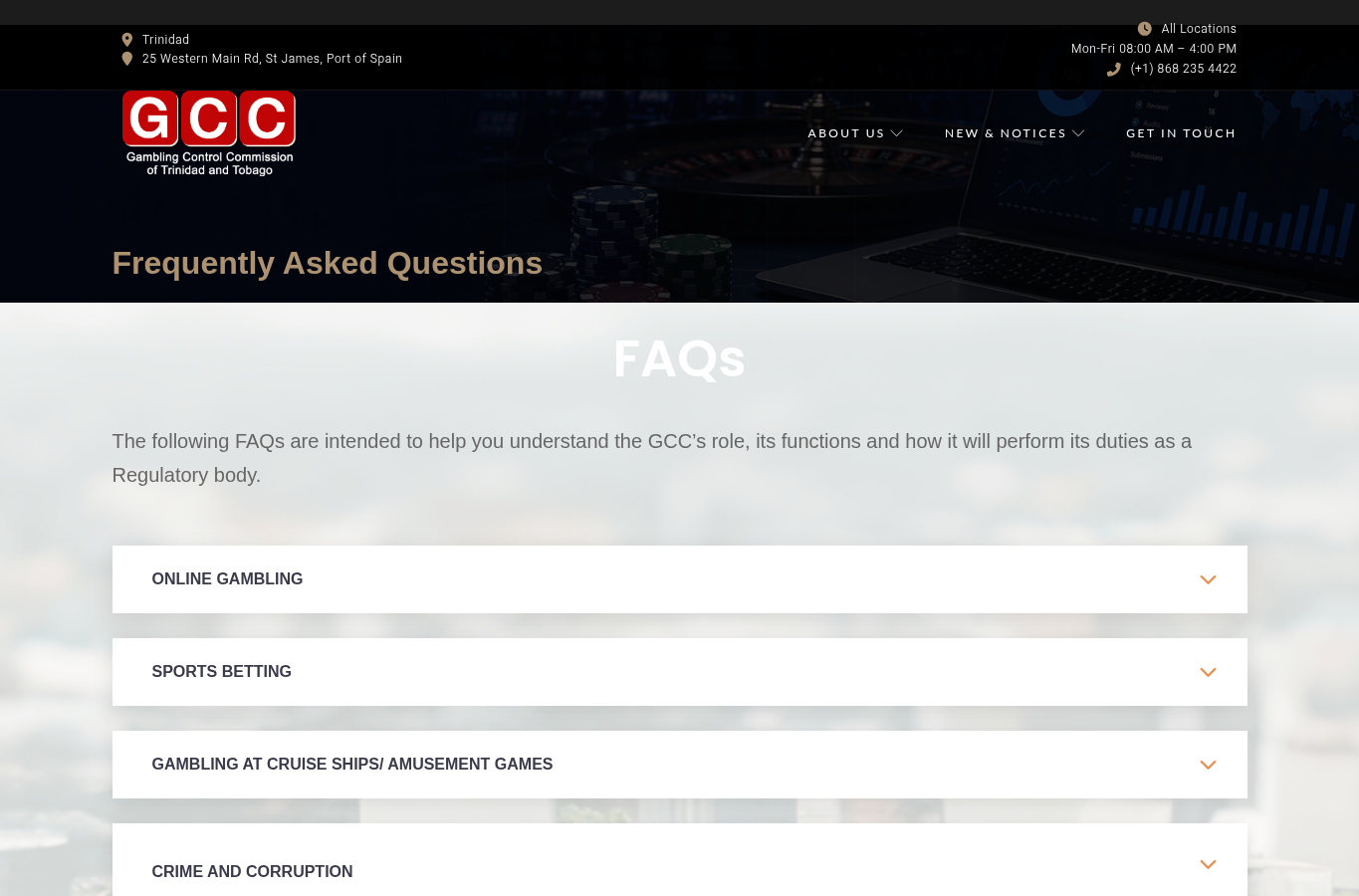
The Gambling (Gaming and Betting) Control Commission says that online betting is not presently contemplated and that further guidance will follow. Its online-betting FAQ is the most direct primary statement supplied for the local online-status question and was checked on 24 August 2026.
The official Parliament entry for Act No. 8 of 2021 supplies the Act, assent information and official download entry. It establishes the legislative source, but the packet does not contain a current domain-specific approval under that framework.
This means “legal” cannot responsibly be reduced to whether a foreign website loads, accepts registration or displays overseas licence information. Accessibility is not authorisation. The local position should be checked through current competent-source guidance, while individual obligations or disputes may require qualified legal advice. The broader licence and law guide explains how to distinguish legislation, regulatory guidance and operator claims.
Login, identity checks and account exposure
No account was opened and no login workflow was tested. The required identity documents, age checks, address verification, source-of-funds requests, account limits and review times are therefore unknown for a customer in Trinidad and Tobago. Do not assume that acceptance of registration means withdrawal eligibility has been confirmed.
Before depositing, record the legal entity displayed in the applicable terms, the country selected on the account and any restrictions presented during registration. Read the identity-check requirements and confirm whether the name on the payment method must match the account. Keep personal data out of ordinary email or messaging unless an authenticated support route clearly requires it.
A request for identity documents is not automatically suspicious; regulated financial and gambling services may conduct checks. The risk lies in sending sensitive material to the wrong domain or an impersonator. Verify the address independently, avoid links supplied by unsolicited contacts, and redact information that is not required where the process permits. Never share a password, full card security code or one-time authentication code with someone claiming to provide support.
If access fails, use a known account-recovery route rather than paying a supposed technician. Repeated password-reset messages that were not requested can indicate attempted account access. Change the password through the exact domain, secure the associated email account and review transaction activity.
Payments, deposits and charge descriptions
The supplied primary payments document provides local card and payment-system terminology, not evidence that any particular method works with this service. The Central Bank of Trinidad and Tobago publication on the national payments system can help readers understand local payment language, but it does not approve the operator or confirm transaction acceptance.
| Payment question | Verified answer | Practical check |
|---|---|---|
| Which deposit methods are available locally? | Not established in the packet | Check the authenticated cashier before committing funds |
| Are deposits processed in TTD? | Unknown | Confirm displayed currency and conversion before approval |
| Are issuer or intermediary fees charged? | Unknown | Review the issuer’s terms and final authorisation amount |
| Will the statement descriptor match the brand? | Not established | Record the descriptor shown after any transaction |
| Are third-party payments allowed? | Unknown | Avoid another person’s instrument unless written terms permit it |
Currency conversion can make the authorised amount differ from the apparent account value. A card issuer, payment intermediary or service may apply separate terms, but no fee structure is supported here. Check the transaction currency, conversion rate, limits and refund route before approval. The payments guide provides a neutral checklist for card, transfer and intermediary risks.
Treat requests to transfer to an individual, cryptocurrency address or unrelated business as a serious mismatch unless that route appears inside the authenticated account and is supported by clear terms. Even then, verify it before paying. Never send a second payment merely because a message claims it is needed to “unlock”, “insure” or “verify” the first.
Withdrawals: what has and has not been tested
No withdrawal test exists in the evidence packet. There is consequently no supported claim about payout speed, approval rate, minimum amount, fees, document-review time or whether funds return to the original method. A displayed estimate would be an operator statement unless independently tested; none is supplied here.
Before depositing, capture the withdrawal rules visible in the authenticated account. Pay attention to method priority, identity checks, account-name matching, currency conversion, limits and any conditions attached to promotional funds. Keep copies of confirmations and reference numbers. Screenshots should show dates and relevant account status without exposing passwords or full financial credentials.
A delayed withdrawal is not automatically proof of fraud. It may involve identity review, method restrictions, disputed account activity or processing delays. Conversely, repeated demands for extra money before release, changing payment instructions, or support contacts moving the conversation to unofficial channels are warning signs. Do not pay a purported tax, clearance charge or recovery agent solely on the strength of a message.
If a withdrawal stalls, ask for the precise reason, required action, amount, date and complaint reference in writing. Preserve the original request time and every response. This creates a usable chronology without overstating what the delay proves.
Complaints, recovery and urgent protective steps
Start with the service’s authenticated support and formal complaint route, if accessible. State the account identifier, transaction reference, amount, date, requested remedy and a concise chronology. Do not include passwords, one-time codes or unnecessary identity-document images.
If impersonation or unauthorised payment is suspected, contact the card issuer or payment provider promptly using a trusted number. Ask about securing the instrument, preserving transaction data and the applicable dispute process. A chargeback is not guaranteed, and deadlines or evidence requirements may apply.
For account compromise, secure the linked email first, change unique passwords and enable available multi-factor protection. Preserve the suspicious domain, headers, phone number, wallet address, payment instructions and message history. Do not continue negotiating with a person who demands secrecy or more money. The complaints and scam warnings guide sets out an evidence-preservation sequence, while urgent help covers immediate harm-reduction steps.
The packet contains no official adverse finding against the exact domain. Complaints or ratings from users remain allegations or personal reports unless a competent dated record establishes the underlying event. They can identify questions to investigate, but cannot alone prove systemic misconduct.
User reports and the limits of reputation signals
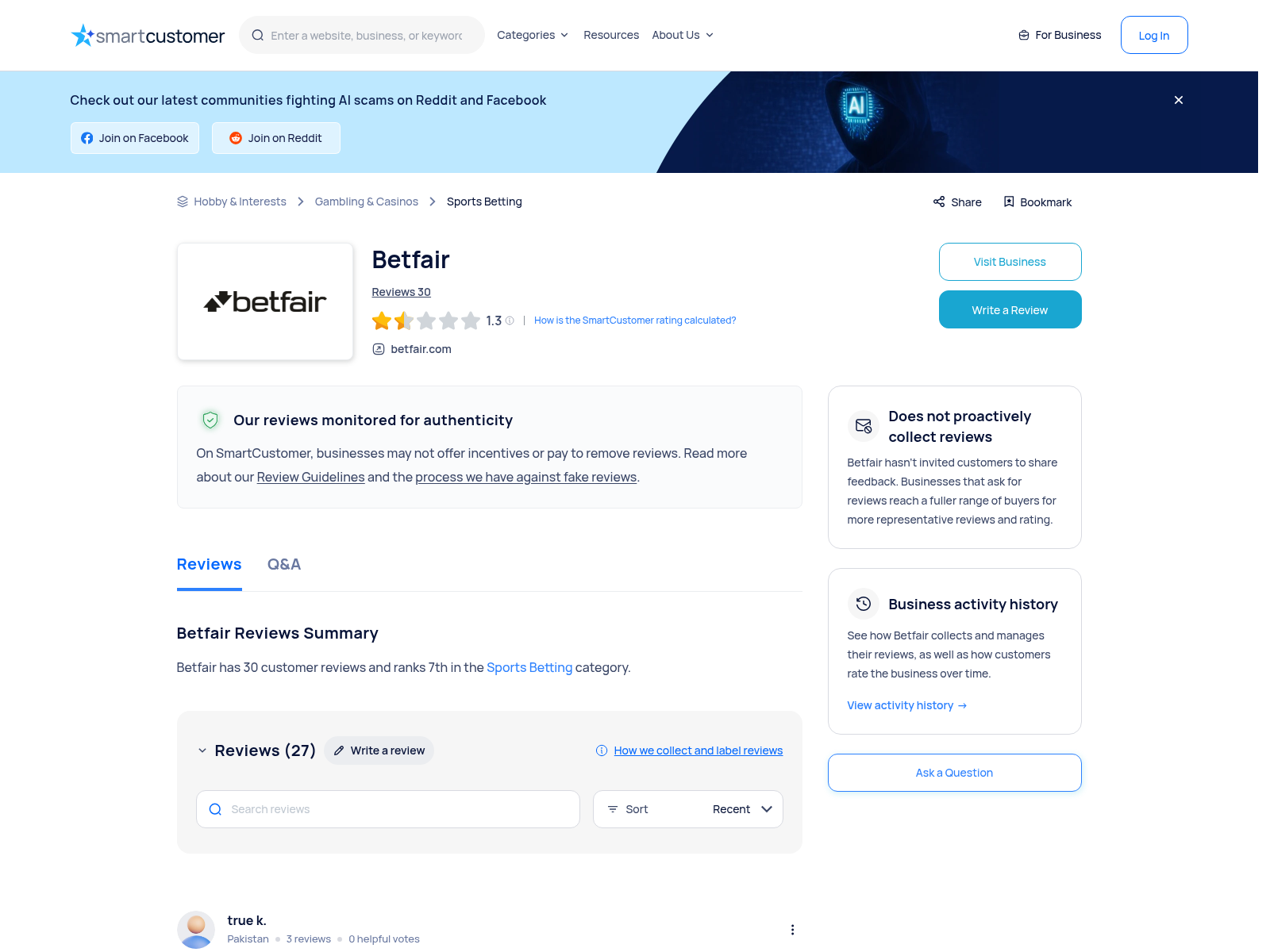
An independent review page for the exact domain was available when checked on 24 August 2026. Its existence provides context only. Ratings can change, reviewers may be unverified, individual disputes may omit material facts, and reports can relate to different products, entities, jurisdictions or time periods.
A useful way to read reports is to extract testable details: the date, service used, jurisdiction, payment method, stated reason for restriction, complaint reference and outcome. Repetition can justify further checking, but volume is not a substitute for primary evidence. Anonymous praise should be treated with the same caution as anonymous accusations.
No review comment in the supplied material establishes a local licence, successful withdrawal, failed withdrawal or official breach. For that reason, the user signal does not change the amber verdict to either green or red.
Evidence chronology, methodology and correction path
All supplied records were checked on 24 August 2026. The operator-controlled domain supports only the fact that the exact address presents the service. The Commission FAQ and Parliament record are primary local sources for regulatory context. The Central Bank publication supplies payment-system terminology. The independent review capture is contextual and receives no authority over identity, licensing or legal status.
| Date checked | Record | Role in the assessment |
|---|---|---|
| 24 August 2026 | Exact service domain | Confirms service presentation only |
| 24 August 2026 | Commission online-betting FAQ | Primary local regulatory guidance |
| 24 August 2026 | Parliament Act entry | Primary legislative record |
| 24 August 2026 | Central Bank payments publication | Primary local payment terminology |
| 24 August 2026 | Independent review-page capture | Unverified user context only |
The method gives priority to a current competent record matching the exact domain, legal entity, activity and jurisdiction. It separates operator statements from primary records and user reports. No browsing result, familiar name or foreign registration is treated as a local licence by implication. No account, identity, deposit or withdrawal test was performed. More detail about evidence weighting is available in the methodology.
Corrections should identify the disputed wording and provide a dated primary record that names the relevant domain, entity, jurisdiction and status. Evidence can be sent through the contact route. A corrected conclusion should follow the record: green only if current primary evidence supports the precise local match, and red only if an official adverse record or corroborated documented evidence supports it. Until then, amber reflects an open evidence question rather than a hidden accusation.
Frequently asked questions
Is Betfair a scam or legitimate?
The supplied evidence does not prove that Betfair is a scam. The exact domain presents the established service, but no current primary Trinidad and Tobago record in the packet confirms a matching local online licence and operator. The appropriate signal is amber, not green or red.
Is Betfair legal in Trinidad and Tobago?
A domain-specific local authorisation was not verified. The Gambling Control Commission says online betting is not presently contemplated and that further guidance will follow. Website accessibility or foreign registration should not be treated as proof of local legality.
What is the exact domain to check before login?
The evidence packet identifies betfair.com. Check that the address ends at that exact registered domain, with no altered spelling, added words or different domain ending. A padlock or copied logo does not establish that a lookalike page is genuine.
Were deposits or withdrawals tested?
No. No account, deposit, payment or withdrawal test was performed. Available methods, TTD support, conversion costs, limits, identity-review timing and payout speed therefore remain unknown.
What should I do if a withdrawal is delayed?
Request the reason, required action and complaint reference in writing. Preserve the withdrawal confirmation, dates, messages and payment records. Do not pay an unofficial contact who promises release in exchange for an extra tax, clearance or verification fee.
How should I report a clone or account compromise?
Stop entering information, preserve the full suspicious address and messages, secure the linked email account, and contact the payment provider promptly if money or card data may be exposed. Use authenticated support and retain reference numbers for any complaint.
Trinidad and Tobago Police Service
WiPay Trinidad and Tobago