
Betano evidence dossier: identity, legality and KYC checks

An identity-document mismatch can turn an ordinary withdrawal request into a difficult dispute. A shortened first name, an old address, a card belonging to somebody else or an account opened with inaccurate details may all trigger verification questions. The central issue is not merely whether Betano is a scam or legit. A player in Trinidad and Tobago must also establish which legal entity accepted the account, whether the exact domain is genuine, what rules applied, and whether the payment account and gambling account have matching ownership.
The supplied evidence confirms that betano.com presents the service associated with the name. It does not establish a current Trinidad and Tobago online-gambling licence for that exact domain and operator. The Gambling and Betting Control Commission also says online betting is not presently contemplated and that further guidance will follow. The resulting signal is amber: there is enough information to conduct meaningful identity checks, but not enough primary local evidence for a green legal or safety conclusion.
Evidence verdict at a glance
| Question | Finding | Practical meaning |
|---|---|---|
| Does the supplied domain present the service? | Yes, according to the operator-controlled domain record checked on 24 August 2026 | Domain presentation alone does not prove the contracting entity, local permission or payment reliability |
| Is a current T&T online licence verified for the exact domain and operator? | No | Do not treat a foreign registration or familiar name as a local authorisation |
| Is there an official adverse finding against the exact domain in the packet? | No | A red scam verdict would overstate the supplied evidence |
| Was an account, deposit or withdrawal tested? | No | Speed, fees, limits and KYC outcomes remain unknown |
| Overall signal | Amber | Verify the domain, legal entity, account terms and payment ownership before risking funds |
Amber is not an accusation of fraud and is not an endorsement. It marks an open-evidence position. The decisive gap is the absence of a current primary Trinidad and Tobago record matching the exact online domain to the stated operator or market entity.
Exact domain, operator and licence match
The identity chain has three separate parts: the domain in the browser, the legal entity named in the account terms, and the licence or registration claimed for that entity. All three should agree for the player’s market. The supplied operator record supports only the first step: betano.com presents the service. The stated operator is “Kaizen Gaming International Ltd / market entity”, wording that itself leaves the market-specific contracting entity unresolved.
Foreign registrations vary by jurisdiction. A foreign document may be genuine while still failing to establish permission to offer online gambling in Trinidad and Tobago. Likewise, a group company’s name is not automatically proof that the same company holds the player’s account or processes the withdrawal.
| Identity layer | What is supported | What remains open |
|---|---|---|
| Domain | The exact domain presents the named service | Whether access is intended or authorised for T&T residents |
| Contracting entity | A Kaizen Gaming entity or market entity is stated in the packet | The exact company contracting with a T&T player |
| Local licence | None verified for the exact domain and operator | Whether later local guidance or authorisation changes the position |
| Foreign status | Registrations may vary | Jurisdiction, scope, validity and relevance to the player’s account |
Before registration, capture the address bar, footer, terms, privacy notice and any company or licence details displayed for the account. Compare names character by character. A logo, colour scheme or search result cannot complete the legal identity chain.
Legal position in Trinidad and Tobago
The official Commission FAQ, checked on 24 August 2026, says online betting is not presently contemplated and that further guidance will follow. Read the Commission’s online-betting guidance in its current context. This does not support a statement that the service holds a Trinidad and Tobago online licence. It also does not, by itself, decide every question about a player’s conduct, offshore access, payment processing or enforceability of terms.
Parliament’s official entry records Act No. 8 of 2021 and its assent. The Gambling (Gaming and Betting) Control Act, 2021 supplies the statutory reference point, but the packet contains no primary record linking this exact domain and stated operator to a local online authorisation under that framework.
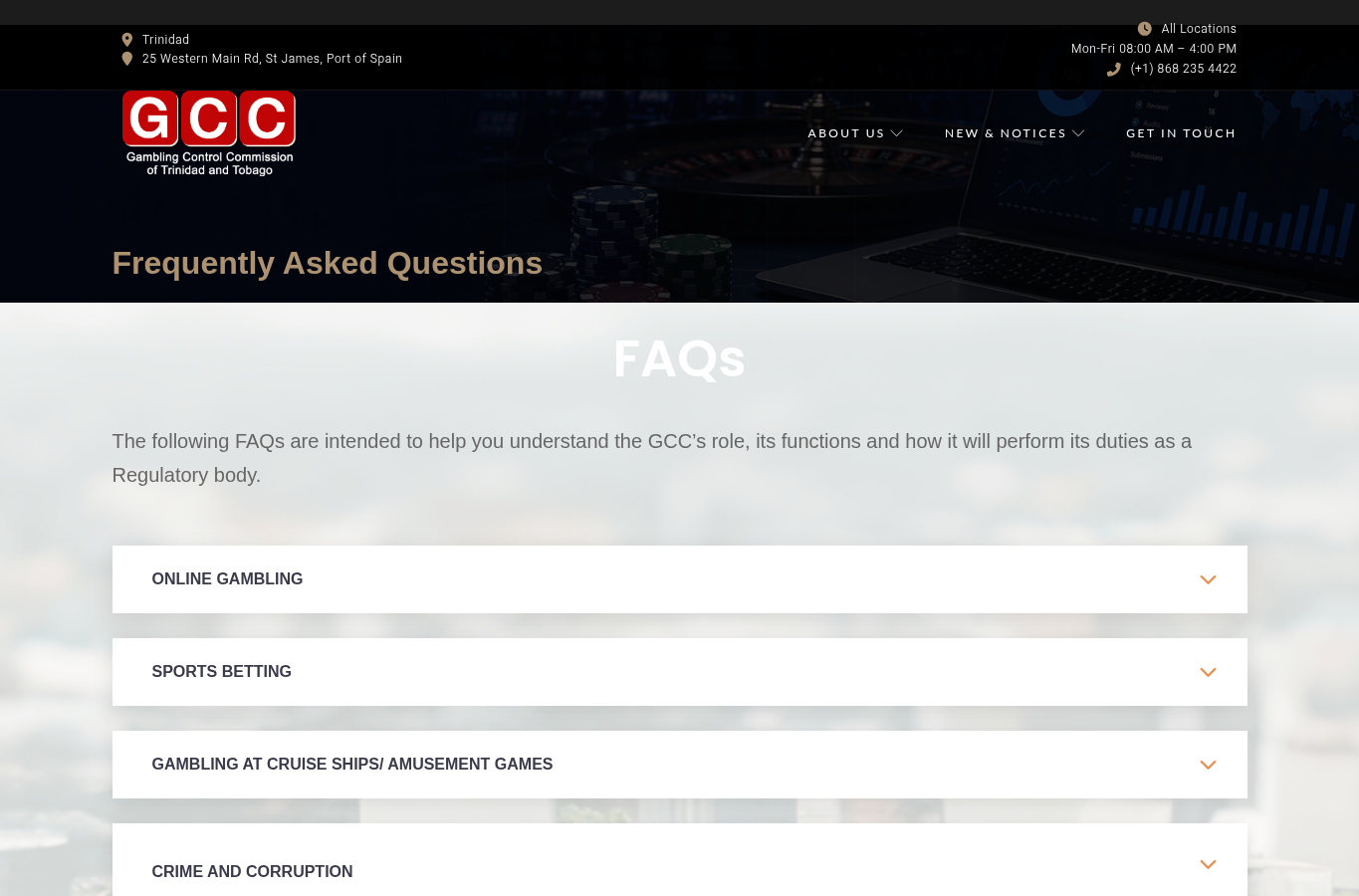
The careful answer to “Is it legal?” is therefore limited: no current primary T&T online licence was verified for the precise domain and operator. Players seeking a broader explanation of the framework can consult licence and law guidance. Legal uncertainty should not be converted into either a blanket criminality claim or an assurance of lawful local operation.
Account ownership and KYC checks
Know-your-customer checks usually become most consequential when money is being withdrawn. No account test was performed, so the documents demanded, review time and acceptance criteria are unknown. The safest preparation is consistency: the account name, date of birth, residential address and payment ownership should match genuine records from the outset.
| Check | Evidence to retain | Mismatch risk |
|---|---|---|
| Personal identity | Valid identification and the exact account profile | Nicknames, reordered names, typing errors or expired documents |
| Residential address | Recent document showing the address used at registration | Moving house without updating the account |
| Payment ownership | Statement or issuer record showing the payer’s name | Depositing with a relative’s card or another person’s wallet |
| Source of funds | Legitimate records requested for the relevant transactions | Incomplete statements or unexplained transfers |
| Account control | Security notices and sign-in history available to the player | Shared accounts, shared devices or compromised credentials |
Never alter a document, obscure requested transaction details without permission or manufacture proof. If a document is rejected, ask for the precise reason and the acceptable replacement format. Retain the rejection message and submission date. Send only what is necessary through the service’s authenticated channel; ordinary email or messaging accounts may expose sensitive identity material.
Payment-name checks before depositing
The payment decision should begin with ownership, not convenience. A deposit method in somebody else’s name can create a three-way mismatch between the player, the funding source and the account holder. Even where a transaction succeeds, that does not prove that a later withdrawal will be approved to the same route.
The Central Bank publication provides Trinidad and Tobago payment-system terminology, but it does not verify that any particular card, bank transfer or other method is accepted by the operator. No payment methods, fees, currencies, minimums or processing times are established by the packet.
Before paying, record the displayed currency, amount, fee, merchant descriptor and destination. Check whether the account balance will be held in TTD or another currency and whether the card issuer may apply conversion or cross-border charges. Guidance on general transaction controls is available under payments.
Do not infer safety from a successful authorisation. Card approval shows only that a transaction passed the relevant payment checks at that moment. It does not establish gambling legality, fair dispute handling, withdrawal eligibility or the identity of every company involved.
Withdrawals: what is known and unknown
No withdrawal test exists in the evidence packet. There is therefore no supported claim about payout speed, reversal frequency, limits, documentary demands or the handling of winnings. Promotional language and user anecdotes cannot replace a dated transaction record tied to a verified account.
A disciplined withdrawal record should include:
- the request date, time, amount and currency;
- the balance immediately before and after the request;
- the selected withdrawal destination and its ownership;
- every status change and verification request;
- any cancellation, fee, adjustment or returned payment; and
- the final credit date, if payment arrives.
Keep screenshots with the browser address visible where practical, but do not publish unredacted identification, card numbers, bank details or security codes. If the service requests repeated documents, ask which specific verification requirement remains unsatisfied. Avoid opening a second account to bypass a restriction, because that can complicate ownership and account-history questions.
A pending payment is not automatically evidence of a scam. It becomes a complaint issue when the facts can be stated precisely: what the terms promised, what was requested, what the player supplied, what response was received and how long the matter remained unresolved.
Complaint packet and escalation route
A useful complaint is a chronology, not a collection of accusations. Start with the account identifier, while excluding passwords and full financial credentials. State the disputed amount, transaction reference, relevant term and remedy sought. Attach only records necessary to prove each point.
| Packet item | Purpose | Privacy treatment |
|---|---|---|
| Account and transaction timeline | Shows the order of events | Use dates and references; omit passwords |
| Terms captured at the relevant time | Identifies the rule relied upon | Preserve the full clause and capture date |
| Deposit and withdrawal records | Connects the amount to the dispute | Mask unrelated transactions and sensitive numbers |
| Verification correspondence | Shows requests, submissions and responses | Redact document numbers where not needed |
| Final complaint and reply | Establishes the unresolved issue | Keep original wording and timestamps |
Use the operator’s authenticated support or complaint mechanism first, provided it can be confirmed on the exact domain. Request a reference number and a final written response. The packet does not identify a competent T&T body that will adjudicate an online-account dispute with this operator, nor does it establish an applicable foreign alternative-dispute process. Do not send documents to an organisation merely because its name appears in an advertisement or copied footer.
For organising a report, use the complaints and scam-warning checklist. If money or identity data may have been stolen, contact the relevant bank or payment provider promptly through a verified channel. Immediate safety and gambling-control support is available through urgent help.
Clone and impersonation checks
A clone may copy branding while changing the domain, payment destination or support contact. Begin with the exact spelling betano.com, but remember that correct spelling alone does not prove local authorisation. Avoid links delivered by unsolicited messages, shortened addresses, advertisements promising account recovery or persons claiming that an extra payment will release winnings.
Check the following before signing in or uploading documents:
- the complete domain in the address bar, including unexpected prefixes or suffixes;
- whether the terms identify the same legal entity as earlier captures;
- whether payment instructions suddenly name an individual or unrelated company;
- whether support asks for a password, one-time code or remote device access;
- whether a “recovery agent” demands tax, clearance or verification money upfront; and
- whether a copied regulator badge leads only to an image rather than a verifiable record.
A clone warning must remain distinct from an allegation against the genuine domain. No supplied record establishes that the exact domain is a clone. The risk is procedural: players should verify identity before sharing funds or documents.
User reports and scam-or-legit claims
A third-party review page was available for the exact domain when checked on 24 August 2026. Its ratings and allegations are user context only. They do not prove that a reported event occurred, that the writer used the same market entity, or that the complaint remained unresolved after all evidence was considered.
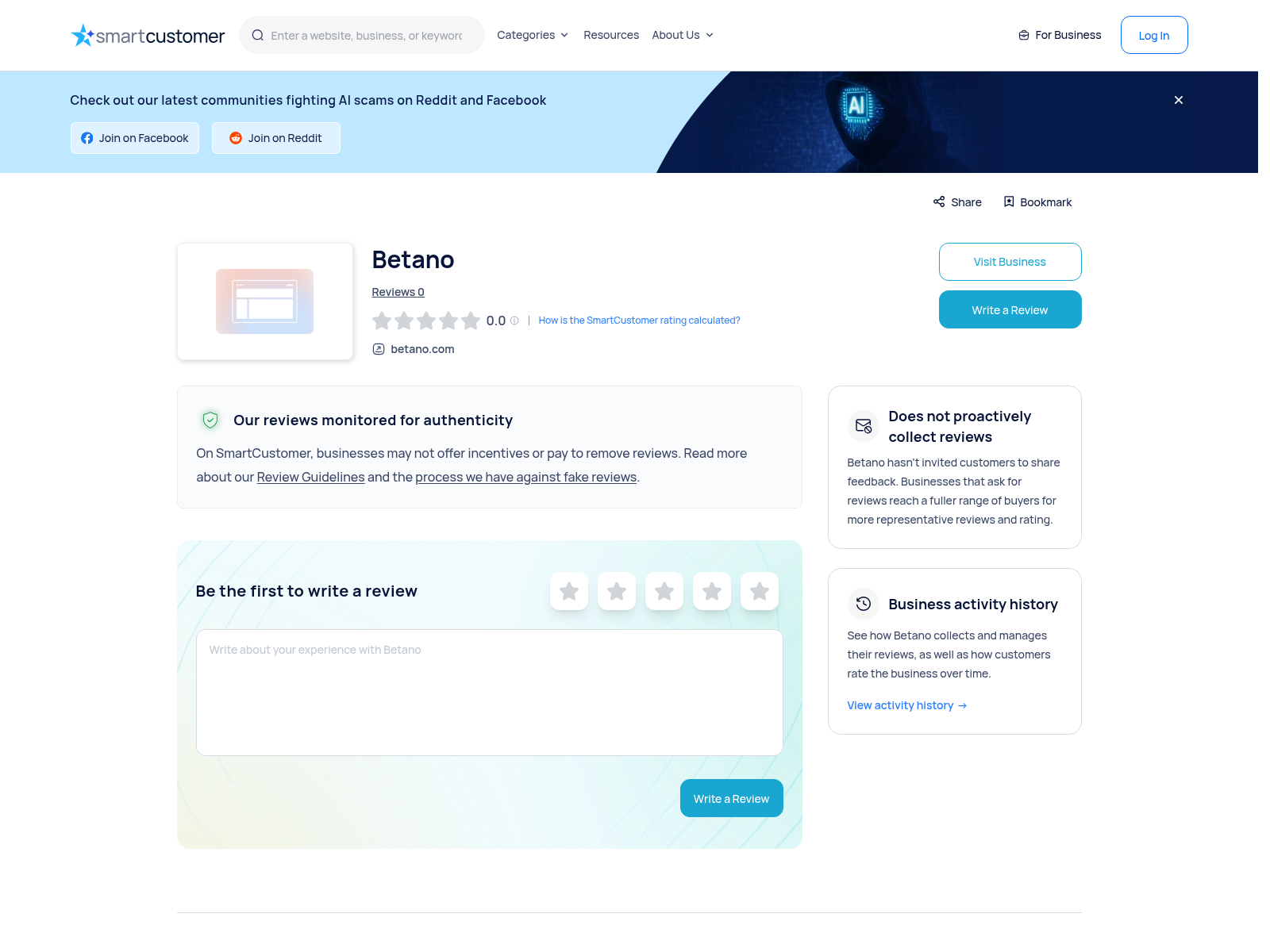
The supplied records support neither a green “fully legitimate” verdict nor a red “scam” verdict. The operator-controlled domain establishes presentation of the service, not independent safety. The official local material establishes an unresolved online-betting position, not a finding of fraud. User reports may suggest questions worth investigating, but they cannot fill the licence, transaction-test or contracting-entity gaps.
Anyone choosing to proceed despite those limits should first complete the identity checks, set a firm spending limit and retain the applicable terms. Continue through disclosure only after confirming that the destination remains the expected domain and that participation is appropriate for the player’s circumstances.
Evidence chronology and method
The assessment separates source roles instead of blending them into one reputation score.
| Date checked | Record | Role in the finding |
|---|---|---|
| 24 August 2026 | Commission FAQ | Primary evidence for the stated official position on online betting |
| 24 August 2026 | Parliamentary Act entry | Primary evidence for Act No. 8 of 2021 and its official publication |
| 24 August 2026 | Central Bank payment publication | Primary terminology context, not proof of operator payment support |
| 24 August 2026 | Exact-domain record | Operator-controlled evidence that the domain presents the service |
| 24 August 2026 | Independent review-page capture | User context only; allegations and ratings remain unverified |
The verdict uses green only where current primary evidence matches the precise domain and entity, and red only for an official adverse record or corroborated documented evidence. Neither threshold is met. Amber follows because the local licence and contracting-entity match remains open, foreign material is jurisdiction-specific, and no account or payment test was conducted.
The review method can be examined under methodology. A future primary record could change the result if it identifies the exact domain, legal entity, jurisdiction, permission and effective date. A documented official adverse action could also change the result in the opposite direction.
Risks, privacy limits and correction path
The principal risks are legal uncertainty, unresolved contracting identity, payment-name mismatch, document exposure, currency or issuer charges, withdrawal conditions and impersonation. None should be exaggerated into a proven loss without a transaction record. Equally, the absence of a proven complaint does not establish safety.
Identity documents contain enough information to enable further harm if mishandled. Share the minimum required through a verified account channel, retain a record of what was sent, and review the service’s current privacy terms before submission. General handling principles are available in the privacy guidance. Never place full card details, passwords or one-time codes in a public complaint.
Corrections should be supported by a dated primary record or complete documentary trail. Useful material includes a regulator entry naming the exact domain and entity, current account terms identifying the contracting company, or a redacted transaction chronology establishing a payment outcome. Submit such material through contact, with sensitive identifiers removed unless a secure process has been agreed.
Frequently asked questions
Is Betano a scam or legit in Trinidad and Tobago?
The supplied evidence does not justify either a green legitimacy endorsement or a red scam finding. The exact domain presents the service, but no current primary Trinidad and Tobago online licence was verified for the precise domain and operator. The signal is amber because key legal, entity and transaction evidence remains open.
Does Betano have a Trinidad and Tobago online-gambling licence?
No current primary record in the packet matches the exact domain and stated operator to a Trinidad and Tobago online-gambling licence. Foreign registrations, where applicable, are jurisdiction-specific and should not be represented as local authorisation.
What should match before I submit KYC documents?
The domain, contracting company, account name, date of birth, address and payment ownership should be consistent. Use only an authenticated channel on the verified domain, send the minimum necessary and retain the request, submission date and response.
Are deposits and withdrawals proven to work?
No. No account, deposit or withdrawal test was performed. The available evidence does not establish supported methods, fees, currencies, limits, processing times or the outcome of verification checks.
How should I complain about a delayed withdrawal?
Prepare a dated timeline with the amount, currency, transaction reference, relevant terms, verification requests, documents supplied and responses received. Use the verified complaint channel, request a case number and final written response, and protect passwords and full financial credentials.
Do negative user reviews prove fraud?
No. User reviews are contextual allegations unless supported by competent, dated evidence. They may identify issues to investigate, but they do not prove the event, the responsible entity, the applicable market or the final outcome.
Trinidad and Tobago Police Service
WiPay Trinidad and Tobago