
Bet365 in Trinidad and Tobago: legitimacy, withdrawals and evidence
A hypothetical withdrawal file starts with a familiar sequence: a player deposits, receives a balance increase, requests a payout and is then asked for identity or payment documents. That sequence does not, by itself, prove fraud. It also does not prove that payment will be completed. The decisive questions are whether the player used bet365.com, which Hillside group entity contracted with the account, what rules applied when the wager was placed, and whether every requested document and communication can be preserved.
The evidence supports an amber assessment. The exact domain presents the service, but no current primary Trinidad and Tobago record supplied for this assessment matches that domain to a locally licensed online operator. Foreign registrations may identify a Hillside group entity in another jurisdiction, yet they cannot be treated as a Trinidad and Tobago authorisation. No account, deposit or withdrawal test was performed.

Withdrawal casebook: what the hypothetical file can establish
Suppose a Trinidad and Tobago customer requests TT$3,000 and sees the transaction remain pending. A useful case file would record the request time, displayed currency, transaction reference, payment rail, account name, verification status and every reason shown for delay. It would also retain the terms visible when the deposit and qualifying wagers were made. Without those records, a delayed withdrawal is difficult to distinguish from routine verification, a payment-rail rejection, a bonus dispute, an account restriction or a refusal requiring escalation.
The strongest first step is not to cancel and resubmit repeatedly. A cancellation may reset internal processing or make the chronology harder to prove. The customer should ask for a written status, the exact outstanding requirement and the entity handling the account. Sensitive documents should be submitted only through an authenticated account channel, not to an address supplied in an unsolicited message.
| File item | What to preserve | Why it matters |
|---|---|---|
| Withdrawal record | Amount, currency, request time and reference | Establishes the transaction being disputed |
| Account identity | Contracting entity and registered account name | Connects the complaint to the responsible business |
| Verification trail | Requests, submission dates and responses | Shows whether KYC requirements were addressed |
| Payment evidence | Deposit descriptor and masked payment details | Helps identify the payment route without exposing full credentials |
| Communications | Complete messages and case numbers | Preserves reasons, promises and escalation history |
A pending status alone is therefore an open question. A written refusal tied to a specific rule can be examined. Silence, changing explanations or requests to send money to release a withdrawal are more serious warning signs, but the packet contains no verified Bet365 withdrawal outcome for a Trinidad and Tobago account.
Evidence checklist and present verdict
Three source roles must remain separate. Primary local records explain the legal and payment environment. The service’s own domain establishes only what the operator presents. A review platform supplies allegations and sentiment, not adjudicated facts. Combining those roles into one claim would overstate the evidence.
| Question | Evidence in the packet | Finding |
|---|---|---|
| Does the exact domain present the service? | Operator-domain record checked 24 August 2026 | Yes, but presentation is not identity or licence proof |
| Is a Trinidad and Tobago online licence verified? | No matching primary local record supplied | No verified local match |
| Does local primary guidance clearly approve online betting? | Commission FAQ says online betting is not presently contemplated and further guidance will follow | No clear approval established |
| Was a local withdrawal tested? | No test record | Unknown |
| Do user reviews prove misconduct? | Review-page context only | No; allegations are not proof |
The result is amber, with an open-evidence basis. It is not a declaration that the service is a scam, nor a certification that it is safe or legal for every local customer. The material establishes a recognisable exact domain and a significant unresolved local-authorisation question. Anyone deciding whether to proceed should verify the contracting entity and applicable rules before funding an account.
Exact domain, operator and licence match
The precise address in the packet is bet365.com. Lookalike spellings, added words, unfamiliar subdomains and links delivered through messages are not covered by this assessment. A copied logo does not establish control of a website. The supplied brand image is useful for orientation only, because visual assets can be reproduced by third parties.
The operator description is “Hillside group entities (service varies by jurisdiction)”. That qualification matters. A group name is not enough to identify the legal person responsible for a particular account. The account registration screen, terms, privacy notice and transaction descriptor should consistently identify the same contracting entity. If different entities appear, the customer should request clarification before depositing.
Foreign licence or registration material is jurisdiction-scoped. It may support identity or regulatory status in the territory named by that record, but it cannot fill the missing Trinidad and Tobago match. The supplied evidence contains no current primary record connecting the exact domain and responsible Hillside entity to a Trinidad and Tobago online licence. The licence field is therefore unresolved rather than assumed.
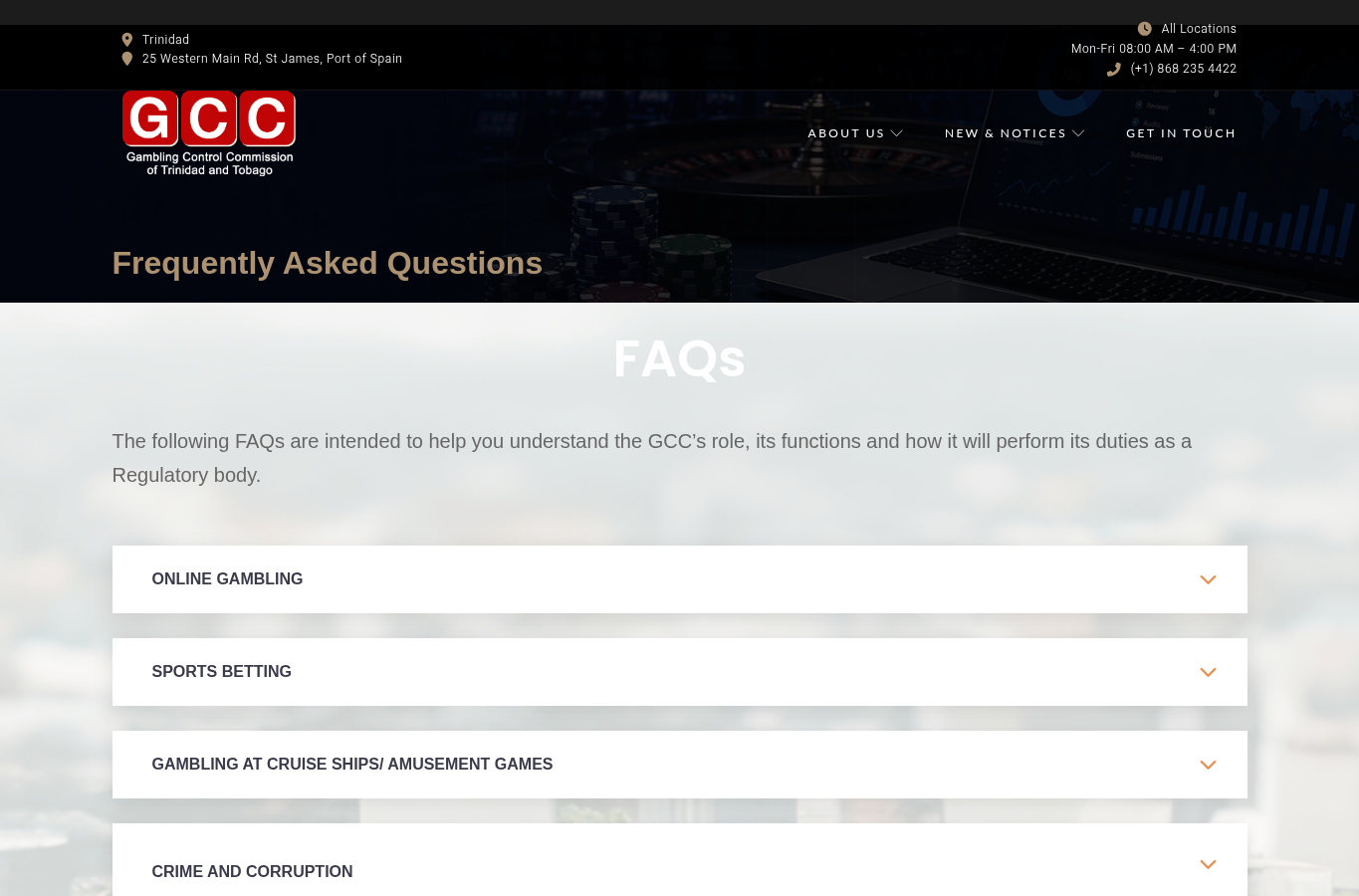
For the legal background, the official entry for Act No. 8 of 2021 records assent and provides the legislation. The Gambling Control Commission’s published FAQ says online betting is not presently contemplated and that further guidance will follow. Those records should be read together; neither supports inventing a local online authorisation for this domain.
Is Bet365 a scam or legitimate?
The available records do not support either extreme answer. Calling the service a scam would require official adverse findings or corroborated documented evidence tied to the exact domain and conduct at issue. None was supplied. Calling it fully legitimate for Trinidad and Tobago would require a current primary match between the domain, contracting entity and applicable local authorisation. That match was also not supplied.
A practical legitimacy check has four layers. First, confirm the exact address independently rather than following an unsolicited link. Second, identify the legal entity shown during registration and in the account terms. Third, verify whether the claimed authorisation covers that entity, activity, territory and current date. Fourth, test support with a non-sensitive question before depositing. Failure at any layer is a reason to stop.
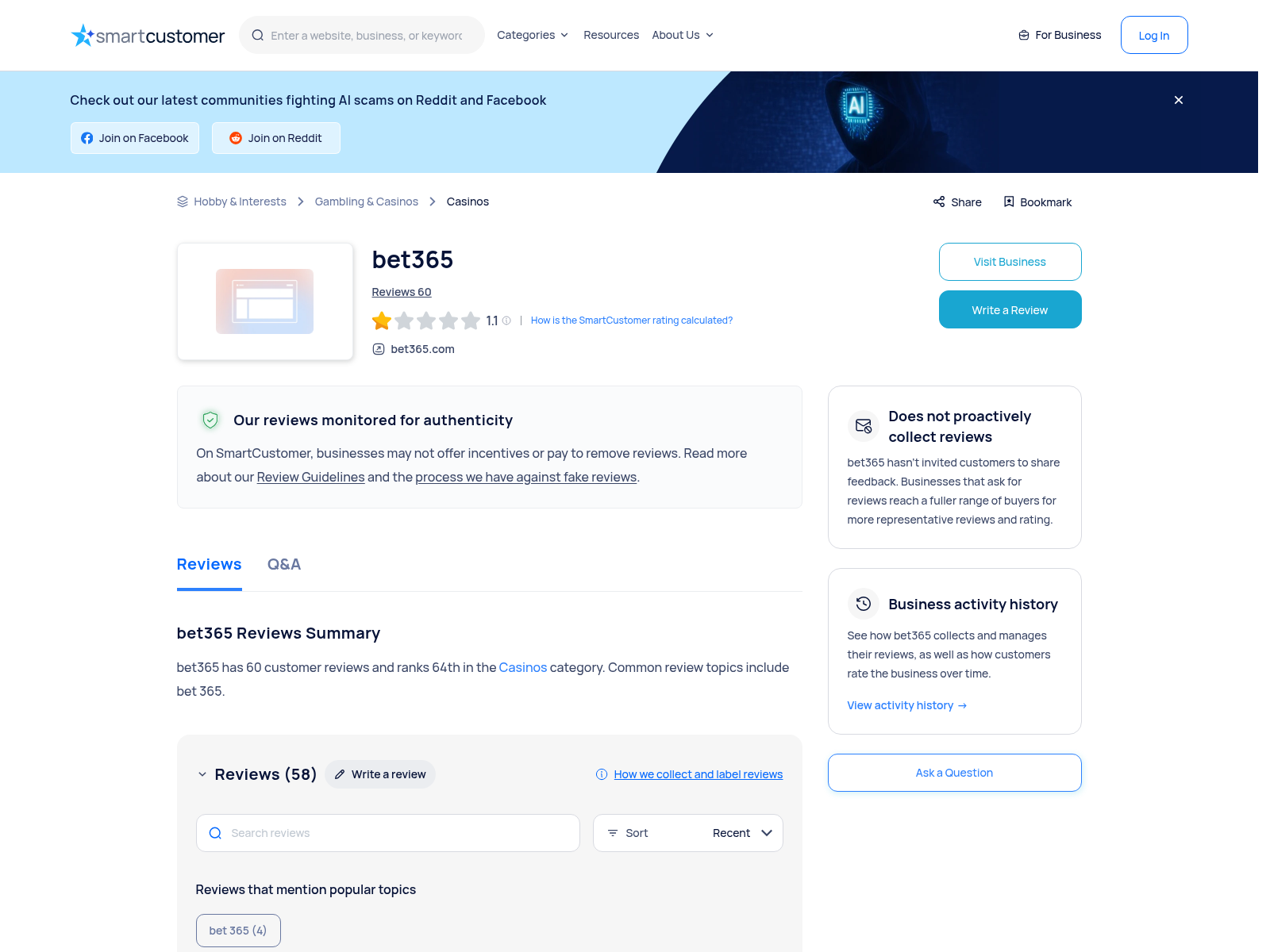
User-review material can reveal themes worth investigating, such as verification delays or withdrawal complaints, but it cannot establish what happened in an individual case. Reviews may be incomplete, mistaken, incentivised or unrelated to Trinidad and Tobago. They should generate questions, not verdicts.
Payments in Trinidad and Tobago
No supplied record confirms which deposit or withdrawal methods are currently offered to a particular local account. Card acceptance, bank processing, currency conversion, issuer controls and service availability can change. A payment logo shown during checkout would indicate a presented option, not guaranteed acceptance or a guaranteed payout route.
The Central Bank’s payments-system publication supplies local payment terminology and context. It does not verify that any named rail works with this service. Customers should confirm the displayed currency, conversion basis, fees, merchant descriptor and whether withdrawals must return to the original funding method.
| Payment question | Evidence to obtain before funding | Unresolved risk |
|---|---|---|
| What currency is charged? | Checkout currency and issuer confirmation | Conversion costs or unexpected settlement currency |
| Who processes the transaction? | Merchant descriptor and contracting entity | Difficulty identifying the responsible party |
| How are withdrawals returned? | Written method and account-name requirements | Rejection where names or rails do not match |
| Are fees imposed? | Operator disclosure plus bank or issuer terms | Charges may arise from more than one party |
| Is the method locally available? | Live authenticated account options | Public information may not match the account |
Never send an additional “release”, “tax” or “verification” payment merely because a message says it is needed to unlock winnings. Pause and authenticate the request through the account’s established support channel. Consult the broader payments guide for a neutral recordkeeping checklist.
KYC and account verification
Know-your-customer checks commonly seek to connect an account to a real person and payment source, but no specific document list or processing time is verified here. A request may involve identity, age, address, source of funds or ownership of a payment method. The existence of verification is not proof of wrongdoing; the safety of the submission channel and proportionality of the request still matter.
Before uploading anything, confirm that the session uses the exact domain, the request appears inside the authenticated account, and the stated recipient matches the entity in the terms. Redact information only where the service expressly permits it. Do not email passwords, one-time codes, full card security codes or remote-access credentials.
A customer facing repeated requests should build a document log: requested item, reason given, submission channel, date, acknowledgement and result. Ask whether the image was unreadable, expired, inconsistent with the account or insufficient for a stated check. That creates a clearer dispute record than repeatedly sending documents without a written explanation.
KYC can also affect withdrawals where account and payment names differ. Using another person’s card or account may create both verification and ownership disputes. Because no account test was performed, there is no supported claim about how quickly this operator verifies Trinidad and Tobago customers or whether a particular document will be accepted.
Withdrawal risks and warning signs
A withdrawal delay should be assessed against its documented cause, not against a promised universal timetable that has not been verified. Relevant causes can include incomplete identity checks, payment-method restrictions, unsettled wagers, bonus conditions, duplicate accounts, security review or incorrect banking details. Listing those possibilities does not mean any applies to a particular case.
| Signal | Sensible response | Evidential meaning |
|---|---|---|
| Clear request for a named document | Verify the channel and respond or challenge in writing | May be routine; not proof of fraud |
| Changing reasons for the same delay | Request one consolidated written explanation | Raises concern and strengthens the need for escalation |
| Demand for passwords or one-time codes | Do not provide them | Serious security warning |
| Request to pay money to unlock winnings | Stop and authenticate independently | Strong scam indicator, though sender identity must be checked |
| Unrecognised address or altered spelling | Leave the website and verify the exact domain | Possible impersonation or clone |
| Account closure without an accessible reason | Preserve records and seek the contractual basis | Dispute requiring documented review |
Set a loss and deposit limit before funding, and do not increase stakes to recover a pending withdrawal. If gambling is becoming difficult to control, use responsible gambling support or urgent help. These routes are informational and do not resolve a payment dispute.
Complaint and escalation route
Start with a concise written complaint to the authenticated account support channel. Include the account identifier without publishing sensitive credentials, the disputed amount and currency, transaction reference, chronology, requested remedy and copies of relevant messages. Ask for a case number, the contracting entity’s name, the rule relied upon and the next escalation stage.
If the response names a foreign regulator or dispute body, verify independently that the body covers the exact legal entity and account jurisdiction. A regulator overseeing another group company may not have authority over the contract. The packet does not establish a competent foreign complaint body for a Trinidad and Tobago account, so none should be invented or promised.
For suspected impersonation, preserve the full address, message headers, payment instructions and screenshots. Contact the bank or payment provider promptly if credentials or funds may be exposed. Do not accuse a named business solely because a scammer copied its branding. The complaints and scam warnings guide explains how to separate an operator dispute from identity theft or a clone.
A correction request about the evidence assessment can be sent through contact. It should identify the disputed claim and provide a dated primary record connecting the precise domain, entity and jurisdiction. Commercial assertions or undated screenshots are not equivalent to a regulator record.
Clone checks before sign-in or payment
Clone detection begins with the complete address, not the colours or logo. Type the known domain directly, inspect every character and avoid shortened links. A padlock only indicates an encrypted connection to the address shown; it does not prove that the organisation behind that address is genuine or locally licensed.
Compare the entity named in account terms, privacy information and payment screens. Unexpected spelling changes, unrelated company names or pressure to move a conversation to private messaging should stop the transaction. Search advertisements can also lead to imitations, so advertisement placement is not evidence of authenticity.
Never reuse a gambling-account password. Enable available account security controls and keep one-time codes private. If a sign-in occurs through an unrecognised address, change the password through the independently verified domain and review payment accounts. A brand mark alone cannot cure a domain mismatch.
After reaching the exact service, the only commercial route supplied for this assessment is: Continue through disclosure. Availability, eligibility and local legal status must still be checked before registration or payment.
Evidence chronology, limits and method
All five supplied records were checked on 24 August 2026. The Parliament entry establishes the official publication context for Act No. 8 of 2021. The Commission FAQ supplies current primary wording about online betting not presently being contemplated and future guidance. The Central Bank publication supplies local payments-system terminology. The exact-domain record is an operator statement, while the independent review page is user context.
The method gives primary records the greatest weight for local law and regulatory status. Operator material can support what the service presents but cannot certify itself. User reports can identify allegations for investigation but cannot establish liability, frequency or a local outcome. Where the records do not answer a question, the finding remains unknown.
No registration, geolocation, deposit, KYC or withdrawal test was performed. No foreign licence record was provided for detailed matching. No current primary Trinidad and Tobago record links the exact domain and responsible Hillside entity to a local online licence. The assessment therefore cannot confirm local availability, payment acceptance, withdrawal speed, document requirements, complaint jurisdiction or a successful payout.
The amber signal should change only with evidence. A current primary record precisely matching the domain, entity, activity and territory could support a stronger positive finding. An official adverse record or corroborated documented evidence could support a red finding. See the full methodology and licence and law guide for the standards used.
Frequently asked questions
Is Bet365 a scam or legitimate in Trinidad and Tobago?
The supplied records do not prove that the exact service is a scam. They also do not establish a current Trinidad and Tobago online licence matching bet365.com and the responsible Hillside entity. The evidence-led result is amber because local authorisation and account-level performance remain unresolved.
Is Bet365 legal for players in Trinidad and Tobago?
No definitive player-specific legal conclusion can be drawn from the packet. The Gambling Control Commission FAQ says online betting is not presently contemplated and that further guidance will follow. No current primary local record supplied here authorises the exact domain and operator pairing.
Has a Bet365 withdrawal from Trinidad and Tobago been tested?
No. There was no registration, deposit, verification or withdrawal test. Payment speed, acceptance, document handling and payout success are therefore unknown for a Trinidad and Tobago account.
What should I do if a withdrawal is pending?
Preserve the amount, currency, reference, request time, verification history and all messages. Ask authenticated support for the exact reason, outstanding requirement, contracting entity and complaint stage. Do not pay an extra fee merely to release winnings, and do not share passwords or one-time codes.
Do online reviews prove that Bet365 withholds money?
No. Review pages provide allegations and user context, not proof of a specific event or general misconduct. A claim should be tested against transaction records, account terms, communications and any competent official finding.
How can I avoid a cloned Bet365 website?
Use the exact domain bet365.com, inspect every character and avoid links from unsolicited messages. Confirm that account terms and payment screens identify a consistent entity. A copied logo, advertisement or padlock does not prove ownership, licensing or local legality.
Trinidad and Tobago Police Service
WiPay Trinidad and Tobago