
888 Casino in Trinidad and Tobago: legitimacy, law and payment risks
The name 888 covers more than one gambling product, so the first task is to separate the casino from sportsbook, lottery and other services that may share branding. The verified domain in this evidence packet is 888.com, which presents a casino service. That domain match does not, by itself, establish which group entity would contract with a player in Trinidad and Tobago, whether registration is locally available, or whether a Trinidad and Tobago licence applies.
Evidence signal: amber. The official local material establishes the wider legal framework and says online betting is not presently contemplated, but no current primary Trinidad and Tobago record supplied here matches the exact domain to a locally licensed operator. Foreign registrations cannot fill that gap because their scope depends on jurisdiction, entity and product.

Casino, sportsbook and lottery are different product boundaries
A familiar name is not enough to answer whether a particular gambling service is legitimate or legal. Casino games, sports wagering and lottery products can fall under different rules, permissions and contractual terms. A registration offered through one product must not be treated as proof that every other product under similar branding is authorised for the same player.
The packet identifies the exact domain as 888.com and says it presents the casino service. It does not establish a Trinidad and Tobago-specific contractual entity, account eligibility rule or local approval. Before depositing, a player should confirm that the page is the casino product, inspect the account terms shown during registration and record the legal entity named in those terms. If the entity changes after a redirect, the new name needs separate verification.
| Question | Verified position | Practical consequence |
|---|---|---|
| Is the named product the casino? | The supplied operator record says 888.com presents the casino service. | Confirm that casino terms, not sportsbook or lottery terms, govern the account. |
| Is one group entity fixed worldwide? | No. The group entity varies by jurisdiction. | Record the entity displayed to the individual player before payment. |
| Is local availability verified? | No local availability record was supplied. | Do not assume that a visible registration form means lawful local access. |
| Was a playing account tested? | No account test was performed. | Registration, identity checks, deposits and withdrawals remain untested. |
Exact domain and operator match
The strongest domain fact available is narrow: the operator-controlled record identifies 888.com as presenting the service. It does not prove the identity of the contracting entity in Trinidad and Tobago, a local licence, payment acceptance or safe withdrawal performance. A domain can establish where a service appears, but not every legal and operational claim associated with it.
The operator description in the packet is deliberately qualified: “888 group entity varies by jurisdiction.” A player therefore needs three items to line up at the same time: the exact domain in the browser, the legal entity in the applicable terms, and the jurisdiction stated for the account. If any one is absent, the identity chain remains incomplete.
Clone checks should focus on spelling and destination rather than colours or logos. A copied logo, sponsored search result, social-media message or shortened link is not reliable identification. Type or independently verify the exact domain, inspect the address after every redirect, and avoid entering credentials when extra words, hyphens, substitutions or unfamiliar endings appear. The logo above is identification material only and must not be used as proof of ownership.
| Identity element | What the packet supports | What remains open |
|---|---|---|
| Domain | 888.com presents the named casino service. | Whether every visitor is accepted or routed to the same entity. |
| Operator | A group entity may vary by jurisdiction. | The exact entity contracting with a Trinidad and Tobago player. |
| Local licence | None was verified for the exact online domain and operator. | Whether any future local permission will cover this product. |
| Foreign registration | May exist on a jurisdiction-scoped basis. | Its relevance to a player located in Trinidad and Tobago. |
Licence scope and the Trinidad and Tobago legal position
The official legal material supplied includes the Gambling (Gaming and Betting) Control Act, 2021, identified as Act No. 8 of 2021 with an official publication and download entry. That establishes an important statutory reference point, but it is not a domain-specific approval for this service.
The Gambling and Betting Control Commission’s official frequently asked questions state that online betting is not presently contemplated and that further guidance will follow. This wording does not support a claim that the exact online casino is licensed locally. It also does not justify turning the absence of a matched licence into a definitive criminal-law conclusion about an individual player. The defensible finding is narrower: no current primary Trinidad and Tobago record in the verified packet matches 888.com and its jurisdiction-dependent operator to a local online licence.
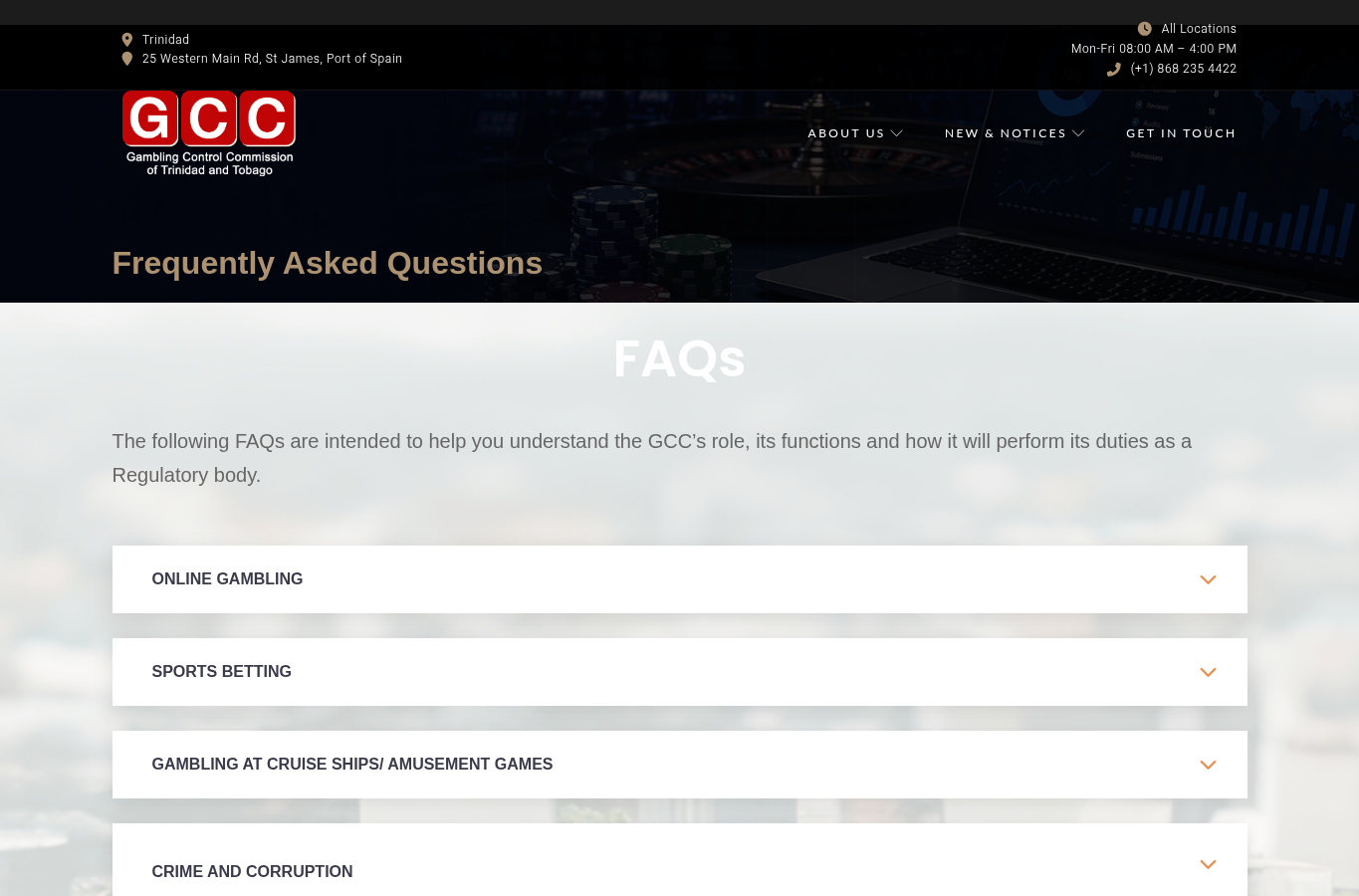
The correct status is therefore amber, not green. Green would require current primary evidence connecting the precise domain, entity and product to an applicable local authorisation. Red would require an official adverse record or corroborated documented evidence. Neither threshold is met by the supplied records.
Scam or legitimate: what the evidence can establish
The question “is 888 Casino a scam or legit?” cannot be answered responsibly with a single reputation score. The packet supports that the exact domain presents the service and that an independent review page exists. It does not contain an official finding that the service is fraudulent, nor does it contain current local licensing evidence sufficient for a green signal.
“Legitimate business identity,” “locally licensed,” “available to register” and “safe for a particular payment” are separate tests. A foreign-facing service may have identifiable corporate material while lacking a verified Trinidad and Tobago online licence. Likewise, a functioning website says nothing conclusive about withdrawal reliability or dispute handling.
The independent review-page record is contextual only. User posts may describe genuine experiences, but they can also be incomplete, duplicated, manipulated, jurisdictionally irrelevant or impossible to verify. Allegations should be checked for dates, transaction records, named entities and evidence of attempted resolution. Ratings and isolated complaints are not proof of fraud.
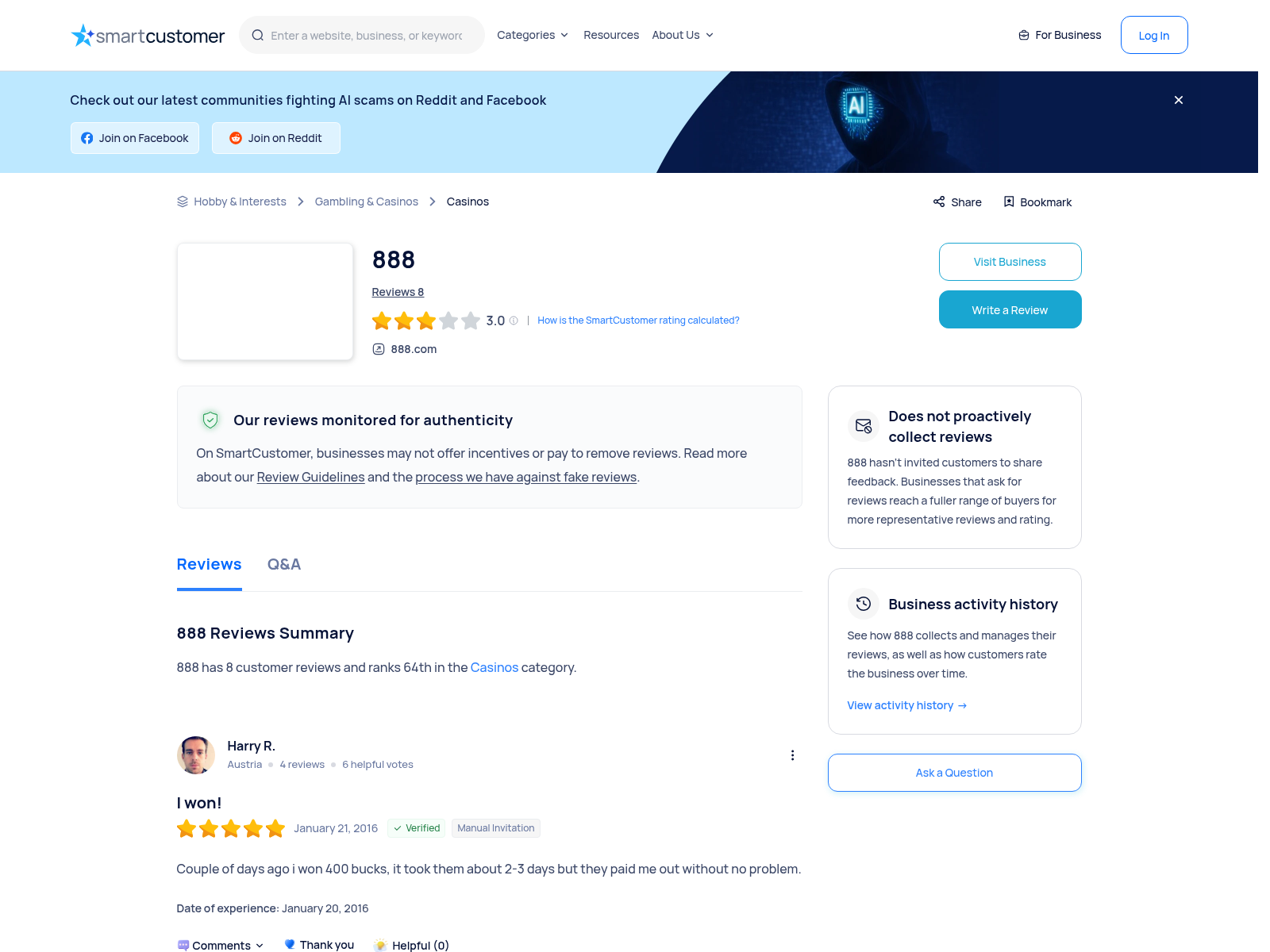
The amber assessment means identity and local authorisation questions remain open. It is not an accusation of fraud and it is not a recommendation. Anyone proceeding should preserve the terms, entity name and payment records before placing funds at risk.
Deposits, cards and transaction records
No specific deposit method, currency, fee, processing time or card acceptance result was verified. The Central Bank’s paper on the payments system in Trinidad and Tobago provides authoritative local payment terminology, but it does not confirm that any local card or payment channel will work with the service.
A deposit should be treated as a traceable transaction rather than merely an account balance change. Before paying, record the displayed currency, amount, fee, merchant descriptor and legal entity. After payment, compare the casino receipt with the bank or card record. Differences in currency or merchant name require clarification before another deposit.
| Payment checkpoint | Record to keep | Risk it helps identify |
|---|---|---|
| Before confirmation | Amount, currency, fee and payment method | Unexpected conversion or added charges |
| After authorisation | Timestamp, reference and merchant descriptor | An unfamiliar recipient or duplicate debit |
| Account credit | Casino transaction identifier and credited amount | Missing or short credit |
| Reversal or refund | Status messages and issuer correspondence | Confusion between a reversal, refund and withdrawal |
| Dispute | Full timeline and copies of communications | Weak evidence when approaching a provider or authority |
Do not assume that a card displaying an international network mark will be accepted, that an issuer will permit gambling transactions, or that a successful deposit guarantees withdrawal by the same route. The packet contains no transaction test. The broader payments guide explains record-keeping and common transaction-risk distinctions without claiming support for a particular method here.
Withdrawals and identity verification
No withdrawal was initiated, observed or timed. There is no supported figure for minimum withdrawal, processing duration, fee, reversal policy or maximum limit. Any precise claim on those points would be speculation. Terms visible to one jurisdiction may also differ from those presented to another.
Identity verification, commonly called KYC, may involve checks on identity, age, address, payment ownership or source of funds, but the packet does not establish the exact documents or sequence used for a Trinidad and Tobago account. The safest approach is to read the applicable account terms before depositing and to submit documents only through a verified account area on the exact domain. Identity documents should never be sent through an unsolicited message or to an address introduced by a social-media contact.
Before requesting a withdrawal, retain the deposit record, wagering or bonus conditions accepted, balance history and verification notices. If a request is delayed, ask for the precise status and any outstanding requirement in writing. Avoid cancelling and replaying a pending withdrawal without understanding the consequence, because that can complicate the transaction record.
A withdrawal delay is not automatically proof of fraud. It may relate to verification, payment routing, terms or a dispute, but those explanations also require evidence. With no account test and no transaction records in the packet, withdrawal performance remains unknown.
Complaints and dispute route
Start a complaint with a factual timeline: registration date, exact domain, contracting entity shown, deposit references, disputed amount, withdrawal request and every response received. State the requested remedy clearly. Do not rely on screenshots alone when downloadable statements, e-mails or reference numbers are available.
| Stage | Action | Evidence to retain |
|---|---|---|
| Service support | Request a case number and written explanation. | Chat transcript, e-mail, case number and terms in force |
| Payment provider | Ask how the transaction was classified and what dispute options apply. | Statement, merchant descriptor and provider response |
| Claimed foreign regulator | Verify that the named entity and product fall within its scope before filing. | Licence entry, entity match and complaint acknowledgement |
| Local guidance | Check the competent authority’s current remit and published process. | Official guidance and submission receipt |
| Editorial correction | Report a factual error with supporting records. | Contested wording, source and requested correction |
A user-review platform is not a regulator and cannot establish liability merely by hosting allegations. Equally, the existence of customer support does not prove that a complaint has been fairly resolved. Keep the distinction between an allegation, an operator response and a competent official finding.
For practical preparation, use the complaints and scam warnings guide. If gambling is causing immediate financial or personal harm, stop transactions and use urgent help. These routes do not replace legal advice or an official complaint channel.
Clone, impersonation and account-security checks
A clone can copy branding while changing the domain, payment recipient or support contact. Begin with the exact domain match: 888.com is the only domain supported by the packet. Similar-looking addresses are not verified. Check the full browser address before login, payment and document upload, especially after advertisements, messages or redirects.
Do not use a logo as authentication. Do not trust a caller or message merely because it knows an account name. Warning signs include pressure to pay a release fee, requests for cryptocurrency to unlock a withdrawal, demands for remote access, instructions to move conversation off the account channel, or a request to disclose a password or one-time security code. These are general defensive checks, not allegations about the named service.
Use a unique password and available multi-factor security. Save the original registration confirmation and compare later support contacts against information inside the verified account area. If the domain, entity or payment recipient changes unexpectedly, pause and obtain a written explanation before sending money or documents.
Access, where offered and lawful, should begin only after these checks. Continue via disclosure rather than following an unverified advertisement or message.
Main risks and unresolved questions
The central risk is the incomplete local match. The packet does not connect the exact domain and jurisdiction-dependent operator to a current Trinidad and Tobago online licence. It also does not prove local account eligibility, accepted payments, withdrawal performance or complaint jurisdiction.
| Risk or unknown | Present evidence | Sensible response |
|---|---|---|
| No matched local online licence | Official guidance says online betting is not presently contemplated. | Treat legal and regulatory coverage as unresolved. |
| Contracting entity varies | Operator identity is jurisdiction-dependent. | Capture the entity and governing terms before payment. |
| Payment support untested | No deposit was attempted. | Verify currency, fee, descriptor and issuer treatment. |
| Withdrawal performance unknown | No withdrawal test exists. | Avoid relying on advertised speed without records. |
| User allegations unproven | An independent review page exists only as context. | Look for corroboration and competent findings. |
| Clone exposure | Only the exact domain is supported. | Reject lookalike addresses and unsolicited payment demands. |
The absence of evidence should remain an unknown, not be converted into reassurance or accusation. Players should also consider ordinary gambling harm: losses can exceed intended limits, repeated deposits can follow failed attempts to recover money, and access to credit can magnify the impact. The responsible gambling resources provide controls and support options.
Evidence chronology, method and correction path
All five supplied records were checked on 24 August 2026. The operator record supports only that the exact domain presents the service. The parliamentary publication supports the existence and official entry of Act No. 8 of 2021. The Commission record supports its stated position on online betting. The Central Bank document supports local payment-system terminology. The independent review capture supplies user context, not proof of any allegation.
The assessment applies a hierarchy. Primary official records carry the most weight for law and regulatory status. Operator material can identify what the service claims or presents but cannot independently prove local authorisation. User reports may identify questions worth investigating but cannot establish facts without corroboration. No account, deposit, identity or withdrawal test was performed.
The signal stays amber because current primary evidence does not complete the domain–entity–licence match, while no official adverse finding or corroborated fraud evidence supplied here supports red. The full assessment methodology explains that distinction.
Corrections can be submitted through contact. A useful correction should identify the disputed statement and include a dated primary record matching the exact domain, legal entity, product and jurisdiction. A foreign licence referring to another entity or territory would not, by itself, resolve the local question.
Frequently asked questions
Is 888 Casino a scam or legitimate?
The supplied evidence does not establish that the service is a scam. It confirms that 888.com presents the casino service, but it does not provide a current Trinidad and Tobago licence match, a tested account or verified withdrawal performance. The resulting signal is amber: important identity, legal-scope and transaction questions remain open.
Is 888 Casino legal in Trinidad and Tobago?
No current primary record in the packet matches the exact domain and jurisdiction-dependent operator to a Trinidad and Tobago online licence. The Commission says online betting is not presently contemplated and that further guidance will follow. That supports caution, not a definitive claim about an individual player’s criminal liability.
Which domain was verified for the casino service?
The operator record identifies 888.com as presenting the casino service. Lookalike addresses, additional words, altered spellings and other domain endings were not verified. The browser address should be checked again after every redirect and before login, payment or identity-document upload.
Are deposits and withdrawals proven to work locally?
No. No account, deposit or withdrawal test was performed, and no specific payment method, fee, currency, limit or processing time was verified for Trinidad and Tobago. A successful deposit would not prove that withdrawal through the same route is available.
What should I keep if I need to complain?
Keep the applicable terms, contracting entity, account identifier, transaction references, merchant descriptor, withdrawal status, identity-verification requests, correspondence and case numbers. Build a dated timeline and ask for a written response before approaching a payment provider or competent authority.
Why is the signal amber rather than green or red?
Green requires current primary evidence matching the precise domain, entity, product and applicable authorisation. Red requires an official adverse record or corroborated documented evidence. The packet supplies neither a complete local licence match nor established adverse findings, so open evidence supports amber.
Trinidad and Tobago Police Service
WiPay Trinidad and Tobago